Word Explanation
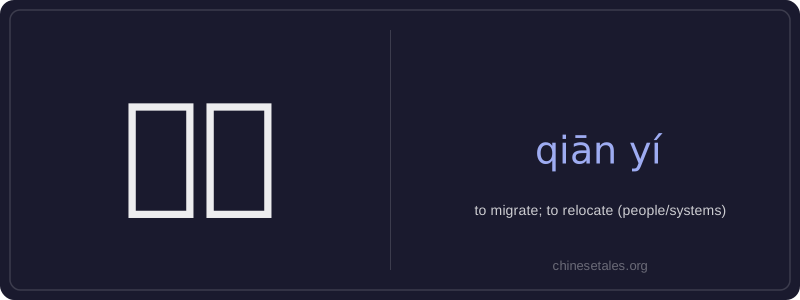
迁移 means 'to migrate' or 'to relocate', describing the movement of people, animals, or even abstract systems from one place to another. The character 迁 (qiān) originally meant 'to move residence' and carries a sense of purposeful, often permanent, change of location; 移 (yí) means 'to shift' or 'to transfer', emphasizing physical or functional displacement. Together, they form a formal, written-term verb commonly used in academic, ecological, governmental, and technological contexts—not everyday casual speech.
You’ll encounter 迁移 frequently when discussing animal behavior (e.g., bird migration seasons), population studies (e.g., rural-to-urban migration), data infrastructure (e.g., migrating servers), or historical resettlement policies. It implies intentionality, scale, and often structural or environmental drivers—not just a simple trip. While it can refer to voluntary moves, it also appears in official discourse about forced or policy-driven relocation.
Example Sentences
Related Words
国语
‘Guó yǔ’ literally means 'national language'—
无论谁
‘无论谁’ (wú lùn shéi) is a pronoun meaning
外语
‘外语’ literally means ‘outside language’ —
面条
‘面条’ (miàn tiáo) literally means ‘flour str
认同
‘认同’ (tóng rèn) is a verb meaning ‘to ident
不对
不对 (bù duì) literally combines 不 (bù), meani
认为
‘认为’ (rèn wéi) is a transitive verb meaning
违规
违规 (wéi guī) literally means 'to violate rules