Word Explanation
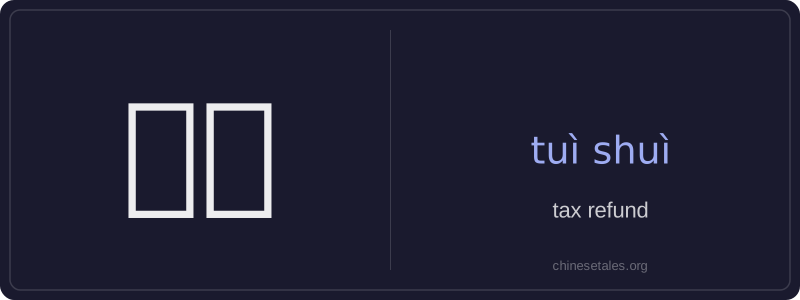
"Tuì shuì" literally means "to withdraw tax" — 退 (tuì) means "to withdraw, return, or refund," and 税 (shuì) means "tax." Together, they form the noun "tax refund": money that a government returns to an individual or business when they have overpaid taxes. This term is commonly used in contexts like personal income tax filing, cross-border shopping (e.g., VAT refunds for tourists), or corporate tax settlements.
In China, 退税 often refers specifically to value-added tax (VAT) refunds for exported goods or consumption tax rebates for foreign visitors who shop at designated stores and meet minimum purchase thresholds. It may also appear on official tax authority websites, customs forms, or mobile apps like the State Taxation Administration’s platform. Unlike informal reimbursement, 退税 carries formal, legal, and procedural connotations — it’s not just a casual refund but a regulated fiscal process governed by tax law.
Example Sentences
Related Words
国语
‘Guó yǔ’ literally means 'national language'—
无论谁
‘无论谁’ (wú lùn shéi) is a pronoun meaning
外语
‘外语’ literally means ‘outside language’ —
面条
‘面条’ (miàn tiáo) literally means ‘flour str
认同
‘认同’ (tóng rèn) is a verb meaning ‘to ident
不对
不对 (bù duì) literally combines 不 (bù), meani
认为
‘认为’ (rèn wéi) is a transitive verb meaning
违规
违规 (wéi guī) literally means 'to violate rules