Word Explanation
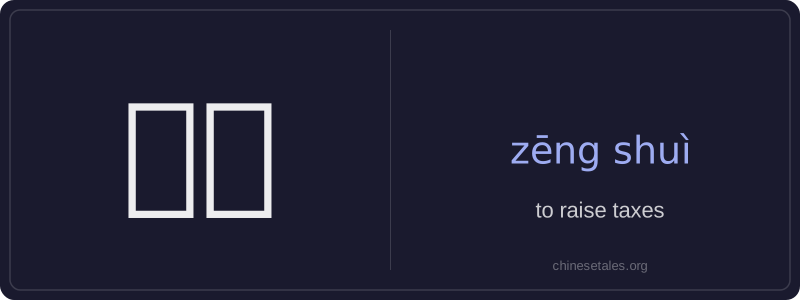
增税 literally means 'increase tax' — 增 (zēng) means 'to increase' or 'to raise', and 税 (shuì) means 'tax'. Together, 增税 functions as a verb meaning 'to raise taxes' — typically referring to government action to increase tax rates or introduce new levies on income, goods, services, or property. It is a formal, policy-oriented term commonly found in news reports, economic analyses, and official announcements.
This word is not used in casual daily conversation but appears frequently in discussions about fiscal policy, budget planning, and public finance. While it can refer to any tax increase, it’s most often associated with national or local government decisions rather than individual actions. The compound follows standard Chinese verb-object structure, though here the object (tax) is implicit in the noun component 税; no object noun needs to follow 增税 when the context is clear.
Example Sentences
Related Words
国语
‘Guó yǔ’ literally means 'national language'—
无论谁
‘无论谁’ (wú lùn shéi) is a pronoun meaning
外语
‘外语’ literally means ‘outside language’ —
面条
‘面条’ (miàn tiáo) literally means ‘flour str
认同
‘认同’ (tóng rèn) is a verb meaning ‘to ident
不对
不对 (bù duì) literally combines 不 (bù), meani
认为
‘认为’ (rèn wéi) is a transitive verb meaning
违规
违规 (wéi guī) literally means 'to violate rules