Word Explanation
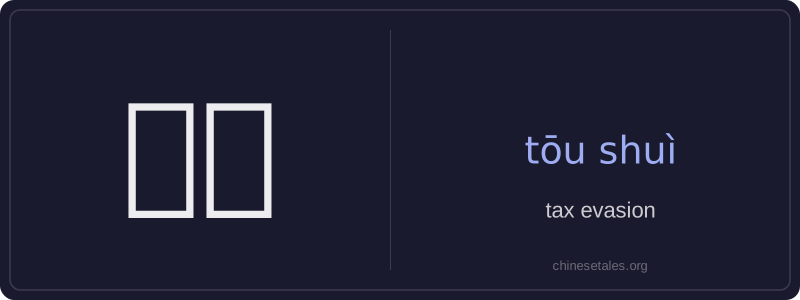
'Tōu shuì' literally means 'to steal tax' — combining 偷 (tōu), meaning 'to steal' or 'to secretly take', and 税 (shuì), meaning 'tax'. It refers to the illegal act of deliberately avoiding paying legally owed taxes, such as by underreporting income, inflating deductions, or hiding assets. Unlike legitimate tax planning, 偷税 involves deception and violates China’s Tax Collection and Administration Law.
This term carries strong negative connotations and is used in formal, legal, and media contexts — never in casual speech. It’s often paired with words like 逃避 (avoidance), 查处 (investigation and punishment), or 追缴 (recovery of unpaid taxes). While similar to 'tax avoidance', 偷税 specifically implies illegality and intent to defraud the state, making it a criminal offense under Chinese law when serious.
Example Sentences
Related Words
国语
‘Guó yǔ’ literally means 'national language'—
无论谁
‘无论谁’ (wú lùn shéi) is a pronoun meaning
外语
‘外语’ literally means ‘outside language’ —
面条
‘面条’ (miàn tiáo) literally means ‘flour str
认同
‘认同’ (tóng rèn) is a verb meaning ‘to ident
不对
不对 (bù duì) literally combines 不 (bù), meani
认为
‘认为’ (rèn wéi) is a transitive verb meaning
违规
违规 (wéi guī) literally means 'to violate rules