Word Explanation
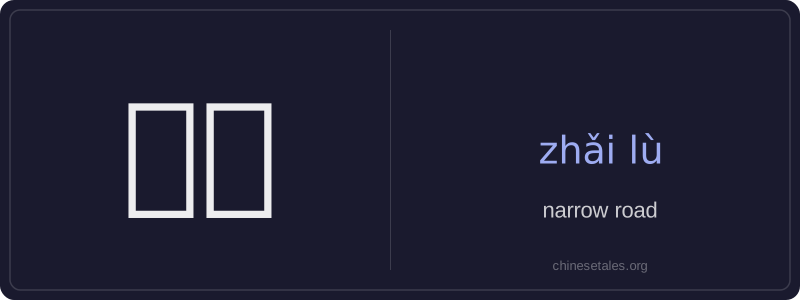
'窄路' literally combines 窄 (zhǎi), meaning 'narrow' or 'tight', and 路 (lù), meaning 'road' or 'path'. Together, it refers to a physically narrow road — one that is constricted in width, often barely wide enough for one vehicle or two people to pass side by side. It commonly appears in descriptions of rural lanes, mountain trails, alleyways in old neighborhoods, or urban backstreets.
The term carries neutral descriptive force but can imply difficulty in navigation, limited visibility, or a sense of intimacy or seclusion depending on context. Unlike broader terms like 道路 (dàolù, 'road') or 街道 (jiēdào, 'street'), 窄路 emphasizes spatial constraint as its defining feature. It’s frequently used in travel writing, directions, safety warnings (e.g., cautioning drivers), and literary depictions of quiet or isolated settings.
Example Sentences
Related Words
国语
‘Guó yǔ’ literally means 'national language'—
无论谁
‘无论谁’ (wú lùn shéi) is a pronoun meaning
外语
‘外语’ literally means ‘outside language’ —
面条
‘面条’ (miàn tiáo) literally means ‘flour str
认同
‘认同’ (tóng rèn) is a verb meaning ‘to ident
不对
不对 (bù duì) literally combines 不 (bù), meani
认为
‘认为’ (rèn wéi) is a transitive verb meaning
违规
违规 (wéi guī) literally means 'to violate rules