Word Explanation
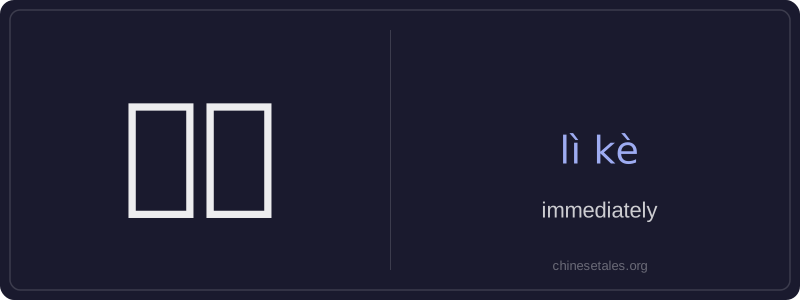
立刻 (lìkè) is an adverb meaning 'immediately' or 'right away'. It combines two characters: 立 (lì), which means 'to stand' and conveys the idea of standing upright—suggesting something happening without delay; and 刻 (kè), originally a unit of time equal to 15 minutes in ancient China, but here used more abstractly to mean 'a moment' or 'an instant'. Together, they emphasize urgency and zero time lag between cause and effect.
This word is common in both spoken and written Mandarin, especially in instructions, requests, warnings, or descriptions of sudden reactions. It often appears before verbs (e.g., 立刻离开, 立刻回答) and can be used at the beginning or middle of a sentence. While similar to 马上 (mǎshàng), 立刻 feels slightly more formal and emphatic, implying greater immediacy—like a reflex rather than a quick decision.
Example Sentences
Related Words
国语
‘Guó yǔ’ literally means 'national language'—
无论谁
‘无论谁’ (wú lùn shéi) is a pronoun meaning
外语
‘外语’ literally means ‘outside language’ —
面条
‘面条’ (miàn tiáo) literally means ‘flour str
认同
‘认同’ (tóng rèn) is a verb meaning ‘to ident
不对
不对 (bù duì) literally combines 不 (bù), meani
认为
‘认为’ (rèn wéi) is a transitive verb meaning
违规
违规 (wéi guī) literally means 'to violate rules