Word Explanation
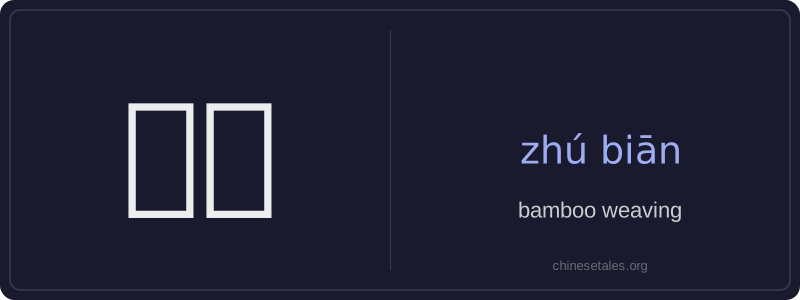
‘竹编’ (zhú biān) literally means ‘bamboo weaving’ — a traditional Chinese craft where thin, flexible strips of bamboo are interlaced to create functional or decorative objects. The first character, 竹 (zhú), means ‘bamboo’, a fast-growing grass widely used in East Asia for its strength and pliability; the second, 编 (biān), means ‘to weave’, ‘to braid’, or ‘to compile’, here referring specifically to the interlacing technique. Together, they name both the process and the resulting products — such as baskets, mats, trays, lanterns, and even modern fashion accessories.
This art form has deep roots in rural China, especially in provinces like Sichuan, Zhejiang, and Guizhou, where skilled artisans pass down techniques across generations. While historically utilitarian, contemporary bamboo weaving is increasingly recognized as intangible cultural heritage and appears in design exhibitions and eco-conscious product lines. It emphasizes sustainability, precision, and patience — qualities reflected in both the material and the method.
Example Sentences
Related Words
国语
‘Guó yǔ’ literally means 'national language'—
无论谁
‘无论谁’ (wú lùn shéi) is a pronoun meaning
外语
‘外语’ literally means ‘outside language’ —
面条
‘面条’ (miàn tiáo) literally means ‘flour str
认同
‘认同’ (tóng rèn) is a verb meaning ‘to ident
不对
不对 (bù duì) literally combines 不 (bù), meani
认为
‘认为’ (rèn wéi) is a transitive verb meaning
违规
违规 (wéi guī) literally means 'to violate rules