Word Explanation
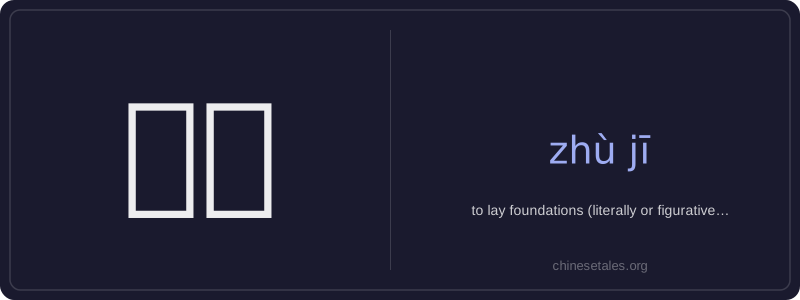
‘筑基’ literally means ‘to build the foundation’ — combining 筑 (zhù), meaning ‘to construct, to build’, and 基 (jī), meaning ‘foundation, base’. Though it can refer to physical construction (e.g., laying foundations for a building), it is most commonly used figuratively in contexts like health, education, martial arts, or spiritual cultivation. In traditional Chinese medicine and qigong, 筑基 describes the initial stage of practice where one strengthens the body, regulates breathing, and stabilizes vital energy (qi) to prepare for advanced techniques.
The term carries a strong connotation of careful, patient preparation — not just starting something, but deliberately establishing solid groundwork before progressing. It appears frequently in classical texts and modern wellness discourse, often implying long-term commitment and systematic effort. While formal and slightly literary, it’s widely understood in health and self-cultivation communities and occasionally appears in motivational or educational settings to emphasize foundational learning.
Example Sentences
Related Words
国语
‘Guó yǔ’ literally means 'national language'—
无论谁
‘无论谁’ (wú lùn shéi) is a pronoun meaning
外语
‘外语’ literally means ‘outside language’ —
面条
‘面条’ (miàn tiáo) literally means ‘flour str
认同
‘认同’ (tóng rèn) is a verb meaning ‘to ident
不对
不对 (bù duì) literally combines 不 (bù), meani
认为
‘认为’ (rèn wéi) is a transitive verb meaning
违规
违规 (wéi guī) literally means 'to violate rules