Word Explanation
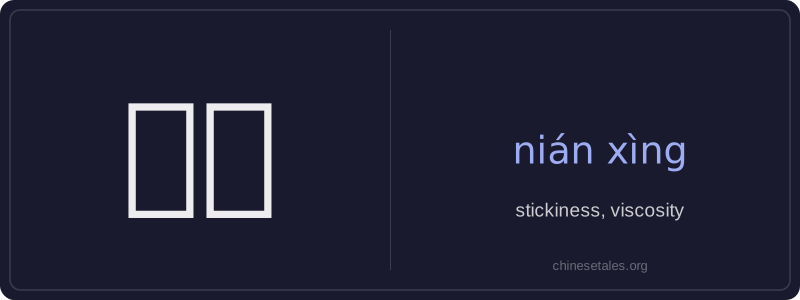
粘性 (nián xìng) is a noun meaning 'stickiness' or 'viscosity'—the physical property of a substance that resists flow and causes it to adhere to surfaces or itself. The first character 粘 (nián) means 'to stick' or 'sticky', while the second character 性 (xìng) means 'nature' or 'property'; together, they literally mean 'the property of stickiness'. This term is commonly used in scientific, culinary, and industrial contexts to describe how thick or adhesive a liquid or semi-solid material is—such as honey, glue, dough, or mucus.
It’s frequently encountered when discussing food texture (e.g., rice varieties), biological fluids (e.g., saliva or nasal mucus), or engineering materials (e.g., adhesives or lubricants). While 粘性 is neutral and technical, it can also appear in everyday descriptions—for instance, commenting on how sticky a sauce feels or how tacky a surface is after rain. Unlike the verb 粘 (nián), which means 'to stick (something)', 粘性 refers specifically to the measurable or perceptible quality—not the action.
Example Sentences
Related Words
国语
‘Guó yǔ’ literally means 'national language'—
无论谁
‘无论谁’ (wú lùn shéi) is a pronoun meaning
外语
‘外语’ literally means ‘outside language’ —
面条
‘面条’ (miàn tiáo) literally means ‘flour str
认同
‘认同’ (tóng rèn) is a verb meaning ‘to ident
不对
不对 (bù duì) literally combines 不 (bù), meani
认为
‘认为’ (rèn wéi) is a transitive verb meaning
违规
违规 (wéi guī) literally means 'to violate rules