Word Explanation
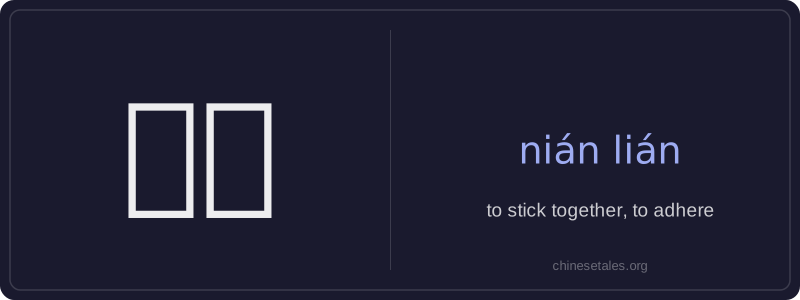
粘连 (nián lián) is a verb meaning 'to stick together' or 'to adhere', often describing an abnormal physical bonding between tissues, surfaces, or objects that should remain separate. The first character 粘 (nián) means 'sticky' or 'to stick', while the second 连 (lián) means 'to connect' or 'to join' — together they emphasize a persistent, often unwanted adhesion. This term is especially common in medical contexts, such as describing scar tissue forming between internal organs after surgery or inflammation.
Outside medicine, 粘连 can also describe everyday situations where substances cling stubbornly — like wet paper pages sticking together or melted plastic adhering to a pan. However, it carries a slightly technical or clinical nuance and is rarely used for simple, temporary sticking (e.g., tape on paper). It implies resistance to separation and often suggests an undesirable or pathological condition requiring intervention.
Example Sentences
Related Words
国语
‘Guó yǔ’ literally means 'national language'—
无论谁
‘无论谁’ (wú lùn shéi) is a pronoun meaning
外语
‘外语’ literally means ‘outside language’ —
面条
‘面条’ (miàn tiáo) literally means ‘flour str
认同
‘认同’ (tóng rèn) is a verb meaning ‘to ident
不对
不对 (bù duì) literally combines 不 (bù), meani
认为
‘认为’ (rèn wéi) is a transitive verb meaning
违规
违规 (wéi guī) literally means 'to violate rules