Word Explanation
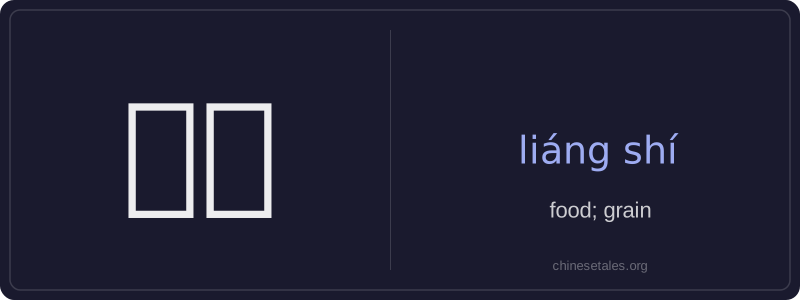
粮食 (liáng shí) literally combines 粮 (liáng), meaning 'grain' or 'staple crop', and 食 (shí), meaning 'food' or 'to eat'. Together, it refers broadly to edible grains—especially staple crops like rice, wheat, corn, barley, and millet—that serve as primary sources of nutrition for humans and livestock. While it can sometimes be used more generally to mean 'food' in formal or agricultural contexts, its core meaning centers on harvested cereal crops, not prepared meals or animal products.
This word is commonly used in discussions about agriculture, food security, national reserves, and rural livelihoods. You’ll encounter it in news reports on harvest yields, government policies on grain storage, or environmental studies on crop sustainability. It carries a slightly formal or institutional tone—unlike the everyday word 食物 (shí wù, 'food')—and rarely appears in casual conversation about personal meals.
Example Sentences
Related Words
国语
‘Guó yǔ’ literally means 'national language'—
无论谁
‘无论谁’ (wú lùn shéi) is a pronoun meaning
外语
‘外语’ literally means ‘outside language’ —
面条
‘面条’ (miàn tiáo) literally means ‘flour str
认同
‘认同’ (tóng rèn) is a verb meaning ‘to ident
不对
不对 (bù duì) literally combines 不 (bù), meani
认为
‘认为’ (rèn wéi) is a transitive verb meaning
违规
违规 (wéi guī) literally means 'to violate rules