Word Explanation
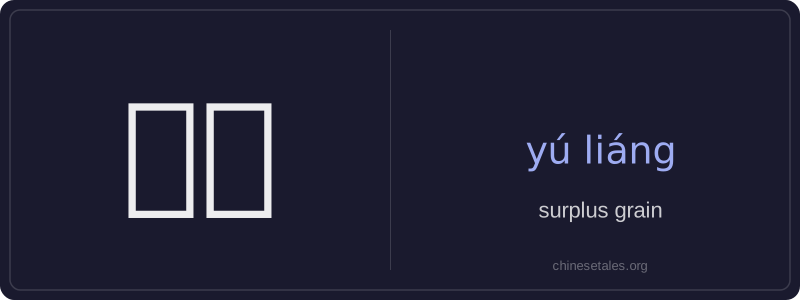
'Yú liáng' literally combines 余 (yú), meaning 'remaining' or 'surplus', and 粮 (liáng), meaning 'grain' or 'food staple'. Together, they form a formal, written-term noun meaning 'surplus grain' — grain left over after meeting immediate consumption, tax, or reserve needs. Historically, it referred to excess harvest stored by households, villages, or the state for emergencies, future planting, or redistribution.
Today, 'yú liáng' appears mainly in policy documents, agricultural reports, historical texts, and economic discussions about food security, rural development, or grain reserves. It carries a neutral-to-positive connotation, implying prudent management and abundance, but never casual or colloquial usage — you wouldn’t say it in everyday conversation about leftover rice. The term emphasizes quantity beyond necessity and is often paired with verbs like 'store', 'distribute', 'purchase', or 'reserve'.
Example Sentences
Related Words
国语
‘Guó yǔ’ literally means 'national language'—
无论谁
‘无论谁’ (wú lùn shéi) is a pronoun meaning
外语
‘外语’ literally means ‘outside language’ —
面条
‘面条’ (miàn tiáo) literally means ‘flour str
认同
‘认同’ (tóng rèn) is a verb meaning ‘to ident
违规
违规 (wéi guī) literally means 'to violate rules
不对
不对 (bù duì) literally combines 不 (bù), meani
认为
‘认为’ (rèn wéi) is a transitive verb meaning