Word Explanation
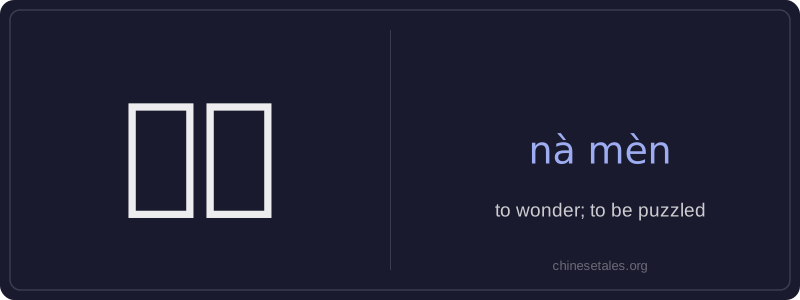
纳闷 is a verb meaning 'to wonder' or 'to be puzzled' — it describes the mental state of feeling confused or perplexed about something unexpected, unusual, or unexplained. The character 纳 (nà) literally means 'to receive' or 'to take in', while 闷 (mèn) means 'stuffy', 'oppressive', or 'mentally stifled'; together, they evoke the feeling of 'taking in' confusion — as if your mind is weighed down by unanswered questions. It’s commonly used in spoken and written Mandarin to express mild, thoughtful bewilderment, often when observing odd behavior, contradictory information, or surprising outcomes.
This word carries a neutral-to-slightly literary tone and is frequently found in narrative contexts, dialogue, or personal reflection. Unlike stronger terms like 愤怒 (anger) or 震惊 (shock), 纳闷 suggests quiet curiosity rather than emotional intensity. It’s typically followed by a clause introduced by 为什么, 怎么, or that explains what’s puzzling the subject — for example, '他怎么突然辞职了?我真纳闷。'
Example Sentences
Related Words
国语
‘Guó yǔ’ literally means 'national language'—
无论谁
‘无论谁’ (wú lùn shéi) is a pronoun meaning
外语
‘外语’ literally means ‘outside language’ —
面条
‘面条’ (miàn tiáo) literally means ‘flour str
认同
‘认同’ (tóng rèn) is a verb meaning ‘to ident
违规
违规 (wéi guī) literally means 'to violate rules
不对
不对 (bù duì) literally combines 不 (bù), meani
认为
‘认为’ (rèn wéi) is a transitive verb meaning