Word Explanation
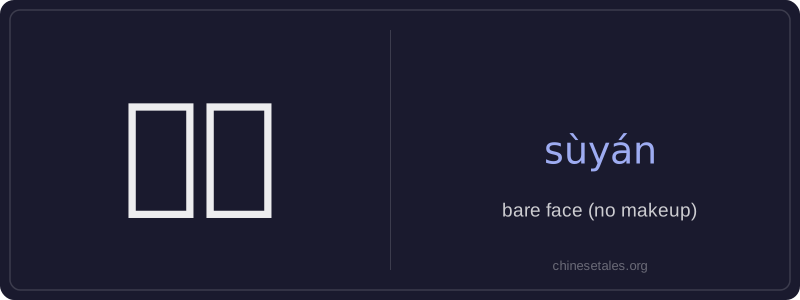
‘素颜’ literally means ‘plain face’ — ‘素’ (sù) conveys simplicity, naturalness, or absence of adornment, while ‘颜’ (yán) means ‘face’ or ‘appearance’. Together, the term refers specifically to a person’s face without any cosmetics: no foundation, concealer, lipstick, or eye makeup. It emphasizes authenticity and natural beauty, often celebrated in skincare marketing, social media trends, and everyday conversation about self-care.
In modern Chinese usage, ‘素颜’ carries positive connotations — it suggests confidence, health, and low-maintenance elegance. People may proudly post ‘素颜照’ (bare-face photos) online to show off clear skin or share their skincare results. It’s also commonly used in contrast with ‘带妆’ (dài zhuāng, ‘wearing makeup’) or ‘浓妆’ (nóng zhuāng, ‘heavy makeup’). While originally neutral, it has evolved into a culturally resonant concept tied to wellness and body positivity in urban China.
Example Sentences
Related Words
国语
‘Guó yǔ’ literally means 'national language'—
无论谁
‘无论谁’ (wú lùn shéi) is a pronoun meaning
外语
‘外语’ literally means ‘outside language’ —
面条
‘面条’ (miàn tiáo) literally means ‘flour str
认同
‘认同’ (tóng rèn) is a verb meaning ‘to ident
违规
违规 (wéi guī) literally means 'to violate rules
不对
不对 (bù duì) literally combines 不 (bù), meani
认为
‘认为’ (rèn wéi) is a transitive verb meaning