Word Explanation
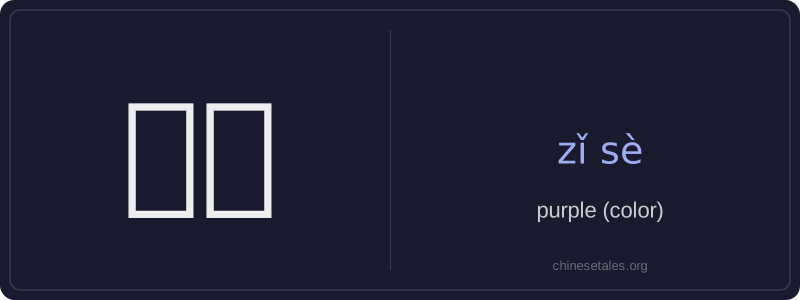
紫色 (zǐ sè) literally means 'purple color' and functions as both a noun ('purple') and an adjective ('purple') in Chinese. The first character 紫 (zǐ) originally referred to the color of the violet plant or imperial purple dye, carrying connotations of nobility and elegance in classical usage; the second character 色 (sè) means 'color' and is commonly used as a suffix to form color terms (e.g., 红色 hóng sè, 蓝色 lán sè). Together, they form the standard, neutral term for the color purple across modern spoken and written Mandarin.
This word appears frequently in everyday contexts — describing clothing, flowers (like purple lilacs or lavender), food (purple sweet potatoes), and digital interfaces. Unlike some English color terms, 紫色 is rarely used metaphorically without clarification (e.g., it doesn’t carry strong emotional associations like 'feeling blue' in English), and it’s not typically shortened in speech — you wouldn’t say just 紫 as a standalone noun meaning 'purple' in most conversational settings.
Example Sentences
Related Words
国语
‘Guó yǔ’ literally means 'national language'—
无论谁
‘无论谁’ (wú lùn shéi) is a pronoun meaning
外语
‘外语’ literally means ‘outside language’ —
面条
‘面条’ (miàn tiáo) literally means ‘flour str
认同
‘认同’ (tóng rèn) is a verb meaning ‘to ident
违规
违规 (wéi guī) literally means 'to violate rules
不对
不对 (bù duì) literally combines 不 (bù), meani
认为
‘认为’ (rèn wéi) is a transitive verb meaning