Word Explanation
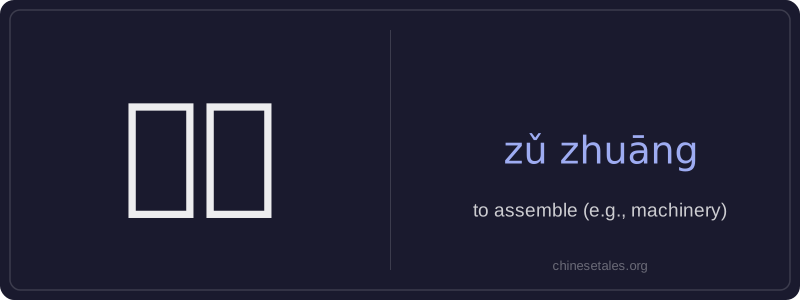
'Zǔ zhuāng' literally combines 'zǔ' (to group, organize) and 'zhuāng' (to install, fit, or equip), resulting in the meaning 'to assemble' — especially physical objects composed of multiple parts. It emphasizes the process of putting components together into a functional whole, such as machinery, furniture, electronics, or vehicles. Unlike general terms for 'putting together,' 组装 implies technical or systematic construction, often following instructions or blueprints.
This verb is commonly used in manufacturing, DIY contexts, engineering, and everyday tasks like building furniture from flat-pack kits. It’s transitive and typically takes a direct object (e.g., 电脑, 自行车). While it can occasionally refer to abstract assembly (e.g., assembling data), its core usage remains concrete and mechanical. The word carries a neutral-to-formal register and appears frequently in manuals, product labels, and workplace communication.
Example Sentences
Related Words
国语
‘Guó yǔ’ literally means 'national language'—
无论谁
‘无论谁’ (wú lùn shéi) is a pronoun meaning
外语
‘外语’ literally means ‘outside language’ —
面条
‘面条’ (miàn tiáo) literally means ‘flour str
认同
‘认同’ (tóng rèn) is a verb meaning ‘to ident
违规
违规 (wéi guī) literally means 'to violate rules
不对
不对 (bù duì) literally combines 不 (bù), meani
认为
‘认为’ (rèn wéi) is a transitive verb meaning