Word Explanation
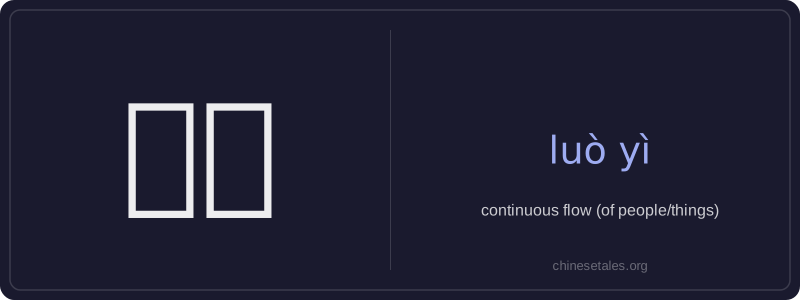
络绎 (luò yì) is a literary two-character noun describing a steady, uninterrupted flow—especially of people or vehicles—arriving one after another, like beads on a string. The first character 络 originally means 'network' or 'to connect', and 绎 means 'to continue without break'; together, they evoke an image of things linked in sequence, moving smoothly and continuously. It’s commonly used in formal writing, news reports, and descriptive narration, often paired with words like 不绝 (bù jué, 'uninterrupted') to form 络绎不绝.
This term emphasizes both quantity and continuity: not just many people, but many arriving steadily over time—think of tourists entering a famous temple, visitors at a museum opening, or cars passing a toll station during rush hour. It carries a neutral-to-positive connotation, suggesting liveliness and popularity, but never chaos or disorder. While it can technically describe objects, its most frequent and natural usage refers to human movement in public or scenic places.
Example Sentences
Related Words
国语
‘Guó yǔ’ literally means 'national language'—
无论谁
‘无论谁’ (wú lùn shéi) is a pronoun meaning
外语
‘外语’ literally means ‘outside language’ —
面条
‘面条’ (miàn tiáo) literally means ‘flour str
认同
‘认同’ (tóng rèn) is a verb meaning ‘to ident
违规
违规 (wéi guī) literally means 'to violate rules
不对
不对 (bù duì) literally combines 不 (bù), meani
认为
‘认为’ (rèn wéi) is a transitive verb meaning