Word Explanation
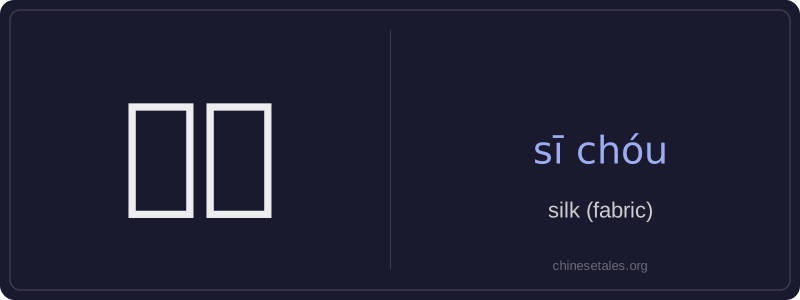
‘丝绸’ (sī chóu) is a compound noun meaning ‘silk’—specifically the smooth, lustrous fabric made from the protein fibers produced by silkworms. The first character, 丝 (sī), literally means ‘silk thread’ or ‘fiber’ and evokes the fine, continuous strands spun by the silkworm; the second character, 绸 (chóu), refers to a tightly woven, glossy textile—often silk but sometimes other fabrics. Together, they form a precise, formal term for silk fabric, emphasizing both origin and texture.
This word appears frequently in contexts related to traditional Chinese culture, luxury goods, fashion, and historical trade (e.g., the Silk Road). It’s more specific and elegant than the simpler 丝 alone, which can mean ‘silk’ in a broader sense (e.g., raw material or metaphorical ‘threads’), and it’s distinct from synthetic alternatives like 尼龙 (ní lóng, nylon) or 涤纶 (dí lún, polyester). Native speakers use 丝绸 to highlight authenticity, quality, or cultural resonance—not just any shiny fabric.
Example Sentences
Related Words
国语
‘Guó yǔ’ literally means 'national language'—
无论谁
‘无论谁’ (wú lùn shéi) is a pronoun meaning
外语
‘外语’ literally means ‘outside language’ —
面条
‘面条’ (miàn tiáo) literally means ‘flour str
认同
‘认同’ (tóng rèn) is a verb meaning ‘to ident
违规
违规 (wéi guī) literally means 'to violate rules
不对
不对 (bù duì) literally combines 不 (bù), meani
认为
‘认为’ (rèn wéi) is a transitive verb meaning