Word Explanation
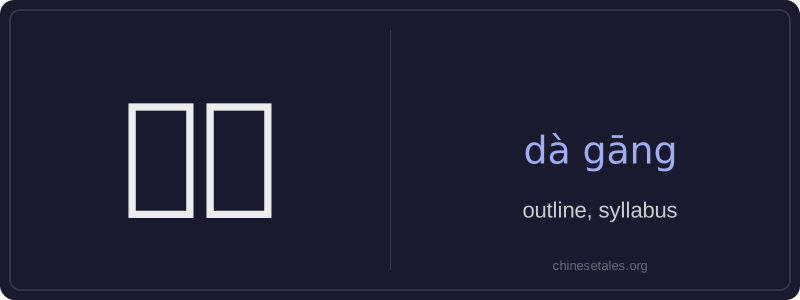
'大纲' (dà gāng) literally combines '大' (dà), meaning 'great' or 'major', and '纲' (gāng), meaning 'main thread' or 'guiding principle'. Together, they form a compound noun meaning 'outline'—a structured summary that captures the essential points and logical flow of a larger work, such as a course, book, speech, or research project. It emphasizes hierarchy and organization: the 'main thread' around which details are arranged.
This term is widely used in academic and professional settings. Teachers prepare a course '大纲' to define learning objectives, weekly topics, readings, and assessments. Writers draft a '大纲' before composing an essay or novel to maintain coherence. Unlike informal notes or bullet lists, a '大纲' implies intentional structure, authority, and official or pedagogical function—it’s often formally distributed or required by institutions.
Example Sentences
Related Words
国语
‘Guó yǔ’ literally means 'national language'—
无论谁
‘无论谁’ (wú lùn shéi) is a pronoun meaning
外语
‘外语’ literally means ‘outside language’ —
面条
‘面条’ (miàn tiáo) literally means ‘flour str
认同
‘认同’ (tóng rèn) is a verb meaning ‘to ident
违规
违规 (wéi guī) literally means 'to violate rules
亲笔
‘亲笔’ literally means ‘one’s own hand’—comb
不对
不对 (bù duì) literally combines 不 (bù), meani