Word Explanation
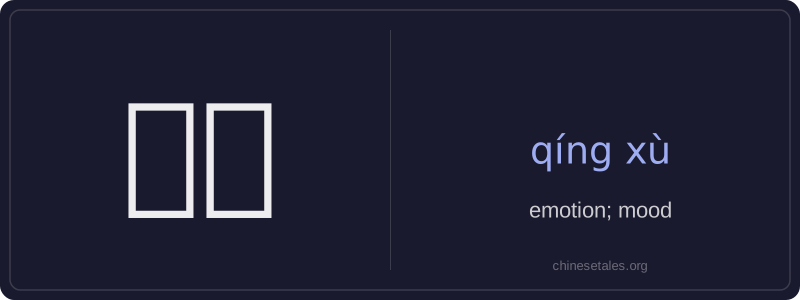
‘情绪’ (qíng xù) is a compound noun meaning 'emotion' or 'mood' — the internal, often fleeting psychological states we experience, such as happiness, anger, anxiety, or calmness. The first character 情 (qíng) means 'feeling' or 'affection', while 绪 (xù) literally means 'thread' or 'end of a thread', suggesting the delicate, tangled, and sometimes hard-to-unravel nature of emotional states. Together, they convey not just raw feeling but the complex, layered quality of how emotions arise, shift, and influence behavior.
This word is commonly used in both everyday speech and formal contexts — for example, when discussing mental well-being, interpersonal communication, or psychological health. It’s more neutral and slightly more formal than colloquial alternatives like 心情 (xīn qíng), and it often implies stronger or more volatile emotional energy, especially in phrases like 情绪波动 (emotional fluctuation) or 情绪管理 (emotion regulation). It rarely refers to a single static state but rather to an ongoing emotional condition or response pattern.
Example Sentences
Related Words
国语
‘Guó yǔ’ literally means 'national language'—
无论谁
‘无论谁’ (wú lùn shéi) is a pronoun meaning
外语
‘外语’ literally means ‘outside language’ —
面条
‘面条’ (miàn tiáo) literally means ‘flour str
认同
‘认同’ (tóng rèn) is a verb meaning ‘to ident
违规
违规 (wéi guī) literally means 'to violate rules
亲笔
‘亲笔’ literally means ‘one’s own hand’—comb
不对
不对 (bù duì) literally combines 不 (bù), meani