Word Explanation
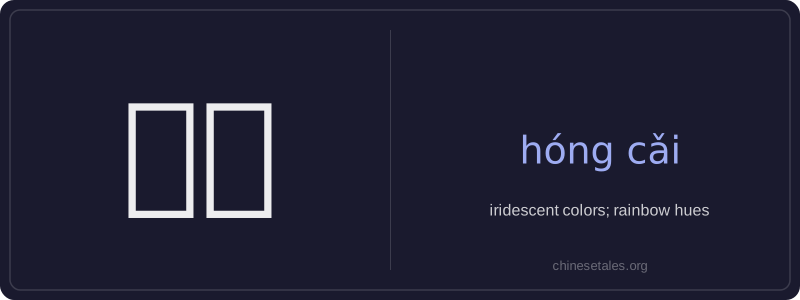
虹彩 (hóng cǎi) literally combines 虹 (hóng), meaning 'rainbow', and 彩 (cǎi), meaning 'color' or 'hue'. Together, it refers to the shimmering, shifting colors seen in natural iridescence—like those on a peacock’s tail, a hummingbird’s throat, or an oil slick on water. Unlike the fixed bands of a rainbow, 虹彩 emphasizes dynamic, angle-dependent color play caused by light diffraction or interference, not pigment.
This term is commonly used in biology and zoology to describe structural coloration in animals, especially birds and insects. It appears less frequently in everyday speech than simpler terms like 颜色 (yánsè, 'color') or 彩虹 (cǎihóng, 'rainbow'), and is more likely found in scientific descriptions, nature documentaries, or poetic writing. While 虹彩 can occasionally refer to the iris of the eye (as in 虹膜, hóngmó), that usage is rare and context-specific—the standard medical term for 'iris' is 虹膜.
Example Sentences
Related Words
国语
‘Guó yǔ’ literally means 'national language'—
无论谁
‘无论谁’ (wú lùn shéi) is a pronoun meaning
外语
‘外语’ literally means ‘outside language’ —
亲笔
‘亲笔’ literally means ‘one’s own hand’—comb
面条
‘面条’ (miàn tiáo) literally means ‘flour str
认同
‘认同’ (tóng rèn) is a verb meaning ‘to ident
短袜
‘短袜’ (duǎn wà) literally means ‘short sock
规范
规范 (guīfàn) is a versatile word meaning 'stand