Word Explanation
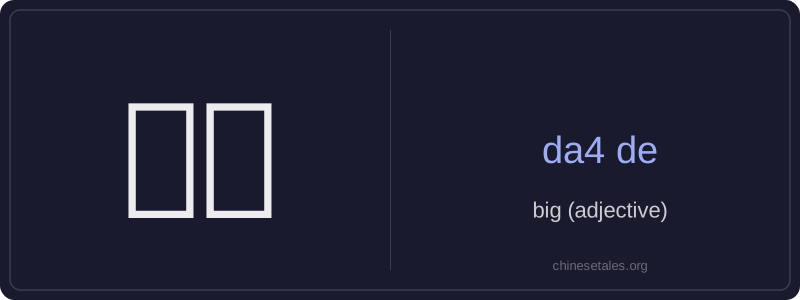
大的 (dà de) is the attributive form of the adjective 'big' used before a noun to describe size. The character 大 means 'big' or 'large', and the particle 的 serves as a linking marker that connects the adjective to the noun it modifies—similar to English 's possessive or the relative pronoun 'that/which'. Unlike standalone adjectives like 大, which can follow verbs (e.g., 这个苹果很大), 大的 only appears before nouns (e.g., 大的苹果). It's neutral in register and commonly used in everyday speech and writing.
This structure applies to most descriptive adjectives in Chinese: adjective + 的 + noun. While 大的 is grammatically correct, native speakers often omit 的 after single-syllable adjectives like 大, 小, 高, and 低 when the meaning is clear and the phrase is common (e.g., 大苹果 is more frequent than 大的苹果). However, 大的 remains essential in formal contexts, compound descriptions, or for emphasis.