Word Explanation
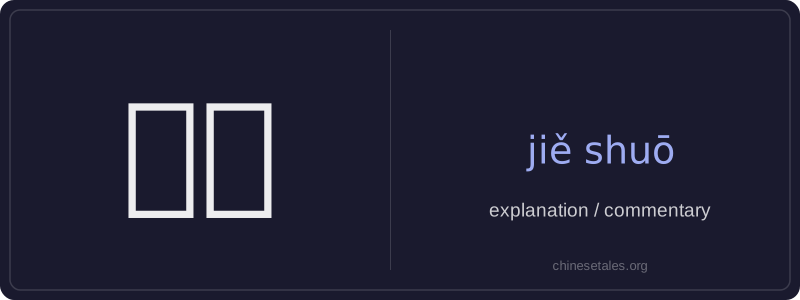
‘解说’ (jiě shuō) is a noun meaning 'explanation' or 'commentary' — the act of clarifying or interpreting something complex, often for an audience. The first character 解 (jiě) means 'to untie', 'to resolve', or 'to understand', and the second 说 (shuō) means 'to speak' or 'to say'. Together, they convey the idea of 'speaking in order to resolve understanding' — making something clear through spoken or written words.
This term is commonly used in contexts like museum exhibits, nature documentaries, sports broadcasts, and educational tours, especially where experts guide listeners through unfamiliar content. It carries a formal, informative tone and often implies structured, authoritative interpretation rather than casual description. While it can appear in writing, it’s most frequently associated with live or recorded oral explanation — such as a park ranger giving a解说 about local wildlife or a commentator providing real-time analysis during a competition.
Example Sentences
Related Words
我的
我的 (wǒ de) is a possessive pronoun meaning 'my'
中国
‘Zhōngguó’ literally means ‘Middle Kingdom’
一天
‘一天’ literally combines the numeral ‘一’ (y
在家
'Zài jiā' literally combines the preposition 'z
不对
不对 (bù duì) literally combines 不 (bù), meani
中学
'Zhōngxué' literally combines 'zhōng' (middle)
红色的
红色的 (hóng sè de) is an adjective meaning 'red
学校的
'学校的' is a possessive phrase meaning 'school's'