Word Explanation
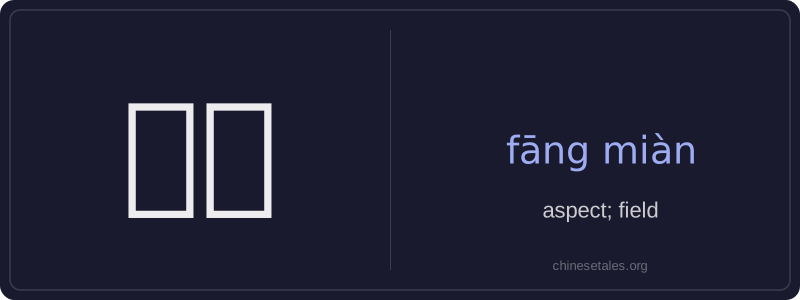
‘方面’ (fāng miàn) literally combines ‘方’ (fāng), meaning ‘direction’ or ‘side’, and ‘面’ (miàn), meaning ‘surface’ or ‘side’. Together, they form a noun meaning ‘aspect’—a particular part or feature of something—and ‘field’ or ‘area’, especially when referring to domains of knowledge, activity, or experience. It’s commonly used in formal and neutral contexts to categorize or analyze components of a topic, such as strengths and weaknesses, professional expertise, or dimensions of a problem.
You’ll often see it after classifiers like ‘这’ (zhè, ‘this’) or ‘那’ (nà, ‘that’), or with measure words like ‘一个’ (yí gè) or ‘各方面’ (gè fāng miàn, ‘all aspects’). It rarely stands alone; instead, it appears in phrases like ‘在…方面’ (zài … fāng miàn, ‘in the area of…’) to specify a domain of focus. It’s not used for physical orientation (e.g., ‘left/right side’) — that’s ‘边’ (biān) or ‘侧’ (cè).
Example Sentences
Related Words
我的
我的 (wǒ de) is a possessive pronoun meaning 'my'
中国
‘Zhōngguó’ literally means ‘Middle Kingdom’
红色的
红色的 (hóng sè de) is an adjective meaning 'red
一天
‘一天’ literally combines the numeral ‘一’ (y
在家
'Zài jiā' literally combines the preposition 'z
不对
不对 (bù duì) literally combines 不 (bù), meani
这边
这边 (zhè biān) literally combines 这 (zhè, 'th
这么
这么 (zhè me) is an adverb meaning 'so' or 'this