Word Explanation
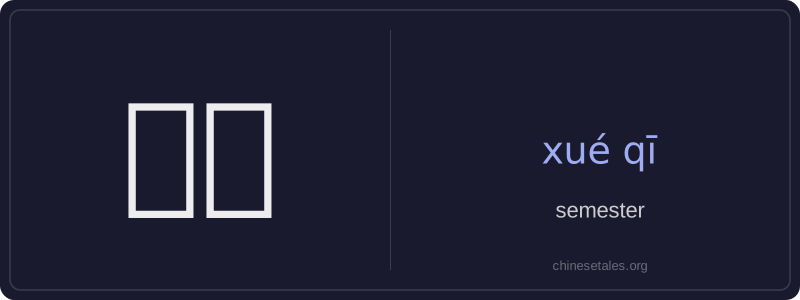
学期 (xué qī) literally combines 学 (xué), meaning 'study' or 'learning', and 期 (qī), meaning 'period' or 'term'. Together, they refer to a fixed academic period during which classes are held—most commonly a semester (roughly 16–18 weeks) in universities or colleges, though some schools use it for terms like 'fall term' or 'spring term'. Unlike the English word 'semester', which strictly implies half a year, 学期 is more flexible: Chinese primary and secondary schools typically have two 学期 per year (first and second), while universities may align more closely with semester systems.
This word is used almost exclusively in formal educational contexts—schedules, calendars, enrollment notices, and administrative documents. It rarely appears in casual conversation outside school-related topics. You’ll often see it paired with ordinal numbers (e.g., 第一学期, 'first semester') or time markers (e.g., 每学期, 'each semester'). It does not refer to non-academic time periods or personal study plans—those would use other terms like 阶段 or 时期.
Example Sentences
Related Words
我的
我的 (wǒ de) is a possessive pronoun meaning 'my'
在家
'Zài jiā' literally combines the preposition 'z
不对
不对 (bù duì) literally combines 不 (bù), meani
中国
‘Zhōngguó’ literally means ‘Middle Kingdom’
红色的
红色的 (hóng sè de) is an adjective meaning 'red
一天
‘一天’ literally combines the numeral ‘一’ (y
一心
‘一心’ literally combines ‘one’ (一) and ‘hea
这边
这边 (zhè biān) literally combines 这 (zhè, 'th