Word Explanation
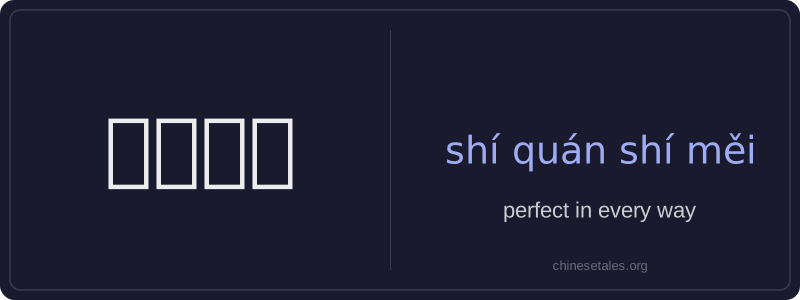
'Shí quán shí měi' literally means 'ten complete, ten beautiful' — a classical Chinese idiom expressing absolute perfection, with no flaw or deficiency in any aspect. The repetition of 'ten' (the highest single-digit number in traditional Chinese numerology) emphasizes totality and completeness, while 'quán' (complete/whole) and 'měi' (beautiful/perfect) reinforce the idea of ideal wholeness and excellence.
This phrase is commonly used to describe people, relationships, events, or outcomes that meet exceptionally high standards — such as a wedding, a performance, or a life goal. Though positive and complimentary, it carries a slightly literary or formal tone and is often used hyperbolically rather than literally, since true 'ten-ten perfection' is understood to be rare or even unattainable in reality.
Example Sentences
Related Words
我的
我的 (wǒ de) is a possessive pronoun meaning 'my'
在家
'Zài jiā' literally combines the preposition 'z
不对
不对 (bù duì) literally combines 不 (bù), meani
这边
这边 (zhè biān) literally combines 这 (zhè, 'th
中国
‘Zhōngguó’ literally means ‘Middle Kingdom’
中学
'Zhōngxué' literally combines 'zhōng' (middle)
红色的
红色的 (hóng sè de) is an adjective meaning 'red
一天
‘一天’ literally combines the numeral ‘一’ (y