Word Explanation
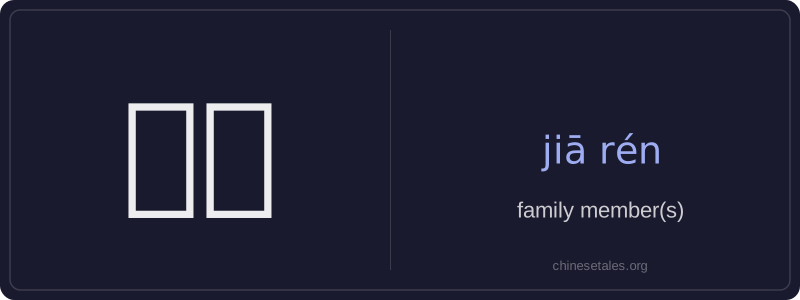
家人 (jiā rén) literally combines 家 (jiā), meaning 'home' or 'family', and 人 (rén), meaning 'person'. Together, it means 'family member(s)' — referring to people related by blood, marriage, or adoption who live together or share close familial bonds. Unlike English, which distinguishes between singular and plural ('family member' vs. 'family members'), 家人 is grammatically plural by default and rarely used in the singular; to specify one person, you’d say 一位家人 (yí wèi jiā rén) or name the relationship (e.g., 妈妈, 爸爸).
This term carries warmth and intimacy, commonly used in daily conversation, writing, and formal contexts alike — for example, when discussing family visits, health updates, or holiday plans. It excludes extended relatives not part of the immediate household unless context implies emotional closeness (e.g., grandparents living nearby). It’s more inclusive and affectionate than the neutral term 亲属 (qīn shǔ, 'relatives') and less formal than 家庭成员 (jiā tíng chéng yuán, 'family members').
Example Sentences
Related Words
我的
我的 (wǒ de) is a possessive pronoun meaning 'my'
在家
'Zài jiā' literally combines the preposition 'z
不对
不对 (bù duì) literally combines 不 (bù), meani
这边
这边 (zhè biān) literally combines 这 (zhè, 'th
中国
‘Zhōngguó’ literally means ‘Middle Kingdom’
中学
'Zhōngxué' literally combines 'zhōng' (middle)
红色的
红色的 (hóng sè de) is an adjective meaning 'red
一天
‘一天’ literally combines the numeral ‘一’ (y