Word Explanation
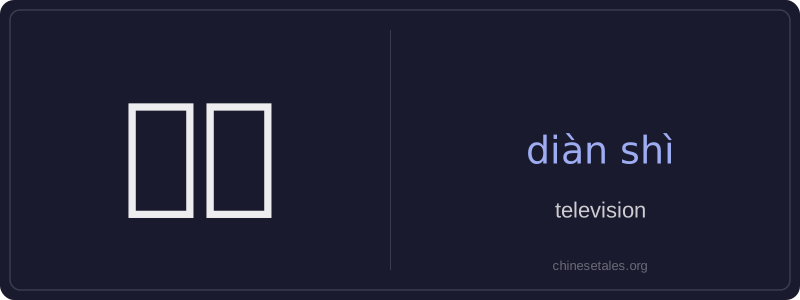
电视 (diàn shì) literally means 'electric vision' — 电 (diàn) means 'electricity' or 'electric', and 视 (shì) means 'to see' or 'vision'. Together, they refer to the electronic device that receives and displays moving images and sound: a television set. It’s a common household appliance used for watching news, dramas, sports, and entertainment programs.
In everyday Chinese, 电视 is used both as a physical object ('Turn off the TV') and as a medium ('Watch TV'), much like the English word 'television'. It’s neutral in register — appropriate in casual conversation, formal writing, and media contexts. You’ll often see it in compound words like 电视机 (diàn shì jī, 'TV set') or 电视台 (diàn shì tái, 'TV station'), but 电视 alone is the standard, concise term.
Example Sentences
Related Words
我的
我的 (wǒ de) is a possessive pronoun meaning 'my'
在家
'Zài jiā' literally combines the preposition 'z
不对
不对 (bù duì) literally combines 不 (bù), meani
这边
这边 (zhè biān) literally combines 这 (zhè, 'th
中国
‘Zhōngguó’ literally means ‘Middle Kingdom’
中学
'Zhōngxué' literally combines 'zhōng' (middle)
红色的
红色的 (hóng sè de) is an adjective meaning 'red
一天
‘一天’ literally combines the numeral ‘一’ (y