Word Explanation
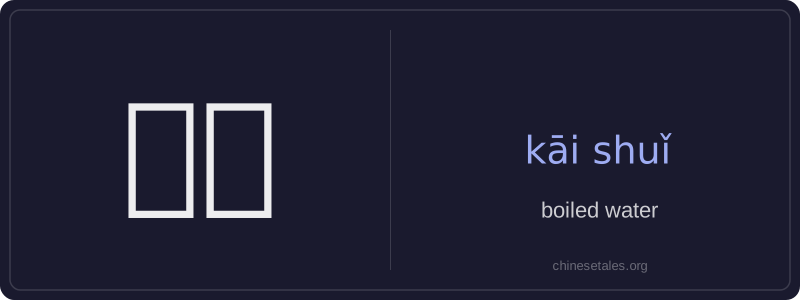
'Kāi shuǐ' literally means 'opened water', where 'kāi' (to open, to boil) refers to the action of bringing water to a full boil, and 'shuǐ' means 'water'. Together, the term specifically denotes water that has been boiled to kill bacteria and pathogens — essential for safe drinking in many Chinese households and medical contexts. It is not just hot water, but water that has reached boiling point (100°C) and is then cooled slightly for consumption.
This term is deeply embedded in daily health practices across China and other Sinophone communities. People commonly drink kāi shuǐ instead of tap or raw water, especially when ill, during pregnancy, or for children. It's routinely served in homes, hospitals, offices, and traditional teahouses. Unlike 'hóng shuǐ' (hot water) or 'wēn shuǐ' (warm water), 'kāi shuǐ' emphasizes the critical safety step of boiling — making it a cornerstone of preventive health culture.
Example Sentences
Related Words
我的
我的 (wǒ de) is a possessive pronoun meaning 'my'
在家
'Zài jiā' literally combines the preposition 'z
不对
不对 (bù duì) literally combines 不 (bù), meani
这边
这边 (zhè biān) literally combines 这 (zhè, 'th
中国
‘Zhōngguó’ literally means ‘Middle Kingdom’
中学
'Zhōngxué' literally combines 'zhōng' (middle)
红色的
红色的 (hóng sè de) is an adjective meaning 'red
一天
‘一天’ literally combines the numeral ‘一’ (y