Word Explanation
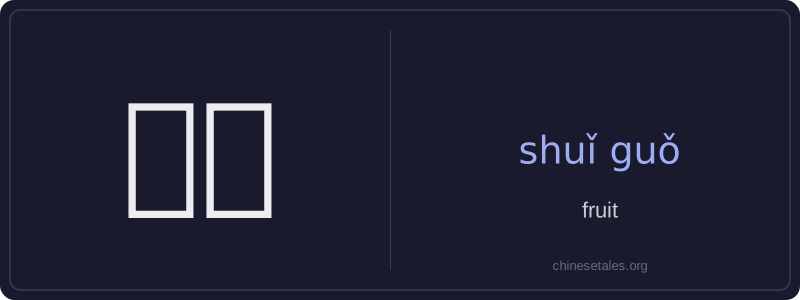
‘水果’ (shuǐ guǒ) literally means ‘water fruit’ — combining 水 (shuǐ, ‘water’) and 果 (guǒ, ‘fruit’ or ‘result’). Though the character 水 might suggest moisture, it reflects the juicy, high-water-content nature of most fruits in Chinese conceptualization. This term refers broadly to edible plant parts that develop from flowers and contain seeds — apples, bananas, oranges, grapes, and so on — distinguishing them from vegetables (蔬菜), nuts (坚果), and dried fruits (干果).
‘水果’ is a standard, neutral-term noun used in everyday speech, markets, recipes, nutrition advice, and health contexts. It’s countable with measure words like 个 (gè) for individual items (e.g., 一个苹果) or 斤 (jīn) for weight-based purchases. Unlike English, Chinese doesn’t use ‘fruit’ as an uncountable mass noun in the same way — ‘水果’ is almost always treated as a plural or collective noun, even when referring to one type (e.g., 我爱吃水果, ‘I love fruit’).
Example Sentences
Related Words
我的
我的 (wǒ de) is a possessive pronoun meaning 'my'
一天
‘一天’ literally combines the numeral ‘一’ (y
在家
'Zài jiā' literally combines the preposition 'z
不对
不对 (bù duì) literally combines 不 (bù), meani
这边
这边 (zhè biān) literally combines 这 (zhè, 'th
中国
‘Zhōngguó’ literally means ‘Middle Kingdom’
中学
'Zhōngxué' literally combines 'zhōng' (middle)
红色的
红色的 (hóng sè de) is an adjective meaning 'red