Word Explanation
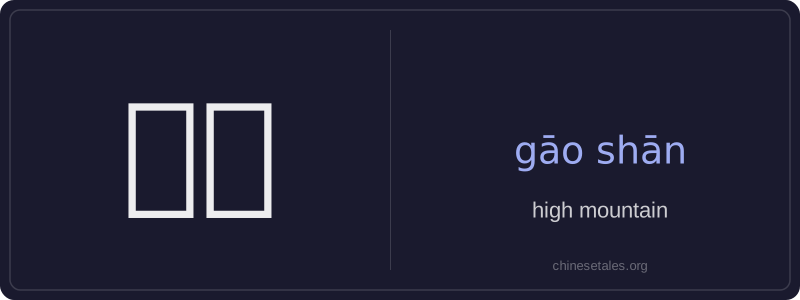
高山 (gāo shān) literally means 'high mountain' — 高 (gāo) means 'high' or 'tall', and 山 (shān) means 'mountain'. Together, they refer to mountains that are notably elevated, often towering above surrounding terrain. Unlike the general term 山 (shān), which can mean any mountain or hill, 高山 emphasizes significant height and is frequently used in geographical, poetic, or descriptive contexts — for example, when discussing mountain ranges, alpine ecosystems, or scenic landscapes.
The term appears commonly in place names (e.g., 高山族 Gāoshān Zú, the Gaoshan people of Taiwan), travel writing, environmental discussions, and classical poetry. It carries a neutral-to-formal register and is rarely used colloquially to describe small hills — for those, people typically say 小山 (xiǎo shān) or just 山. 高山 also evokes associations with remoteness, grandeur, and natural purity, making it a frequent motif in Chinese art and philosophy.
Example Sentences
Related Words
我的
我的 (wǒ de) is a possessive pronoun meaning 'my'
一天
‘一天’ literally combines the numeral ‘一’ (y
在家
'Zài jiā' literally combines the preposition 'z
不对
不对 (bù duì) literally combines 不 (bù), meani
这边
这边 (zhè biān) literally combines 这 (zhè, 'th
中国
‘Zhōngguó’ literally means ‘Middle Kingdom’
中学
'Zhōngxué' literally combines 'zhōng' (middle)
红色的
红色的 (hóng sè de) is an adjective meaning 'red