Word Explanation
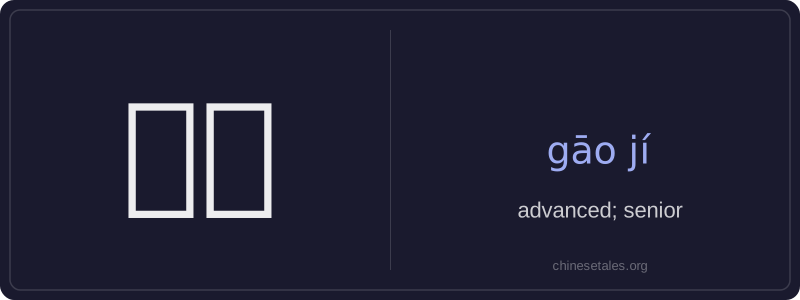
高级 (gāo jí) is an adjective meaning 'advanced' or 'senior', formed by combining 高 (gāo, 'high') and 级 (jí, 'level' or 'grade'). Literally, it means 'high-level', and it describes something that is more complex, sophisticated, or higher in rank than standard or basic versions. It’s commonly used for courses, certifications, software, job titles, and products — for example, 高级工程师 (senior engineer) or 高级汉语课程 (advanced Chinese course).
The term carries a formal, positive connotation and often implies expertise, exclusivity, or elevated status. Unlike the standalone word 高 (gāo), which simply means 'tall' or 'high', 高级 cannot be used to describe physical height. It functions exclusively as a pre-nominal modifier — always placed directly before a noun, never predicatively (e.g., you can say 高级课程 but not *这门课很高级 in casual speech; instead use 更高级 or 非常高级 for emphasis). It’s frequently contrasted with 初级 (beginner) and 中级 (intermediate) in structured learning contexts.
Example Sentences
Related Words
我的
我的 (wǒ de) is a possessive pronoun meaning 'my'
一天
‘一天’ literally combines the numeral ‘一’ (y
在家
'Zài jiā' literally combines the preposition 'z
不对
不对 (bù duì) literally combines 不 (bù), meani
这边
这边 (zhè biān) literally combines 这 (zhè, 'th
中国
‘Zhōngguó’ literally means ‘Middle Kingdom’
中学
'Zhōngxué' literally combines 'zhōng' (middle)
红色的
红色的 (hóng sè de) is an adjective meaning 'red