Word Explanation
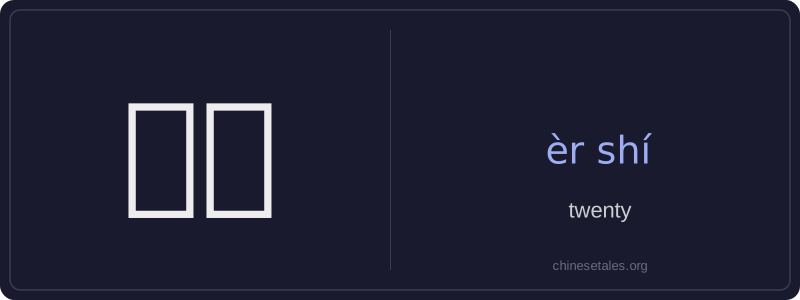
二十 (èr shí) is the Chinese numeral for 'twenty'. It literally combines the characters 二 (èr), meaning 'two', and 十 (shí), meaning 'ten' — together forming 'two tens', or 2 × 10 = 20. Like all Chinese numerals, it functions as a determiner before nouns (e.g., 二十本书) or as a standalone number in counting, age, time, and measurement contexts.
This word follows standard Chinese numeral formation: multiples of ten are expressed as [digit] + 十, so 二十, 三十, 四十, etc. Unlike English, Chinese does not use a separate word like 'twenty'; instead, it builds numbers transparently from basic digits and place values. It’s used frequently in daily life — stating ages, prices, quantities, dates, and time (e.g., 二十点 for 8 p.m.). Note that it never takes measure words on its own; a measure word is required when modifying a noun (e.g., 二十个苹果, not *二十苹果).
Example Sentences
Related Words
我的
我的 (wǒ de) is a possessive pronoun meaning 'my'
一天
‘一天’ literally combines the numeral ‘一’ (y
在家
'Zài jiā' literally combines the preposition 'z
不对
不对 (bù duì) literally combines 不 (bù), meani
这边
这边 (zhè biān) literally combines 这 (zhè, 'th
中国
‘Zhōngguó’ literally means ‘Middle Kingdom’
中学
'Zhōngxué' literally combines 'zhōng' (middle)
红色的
红色的 (hóng sè de) is an adjective meaning 'red