Word Explanation
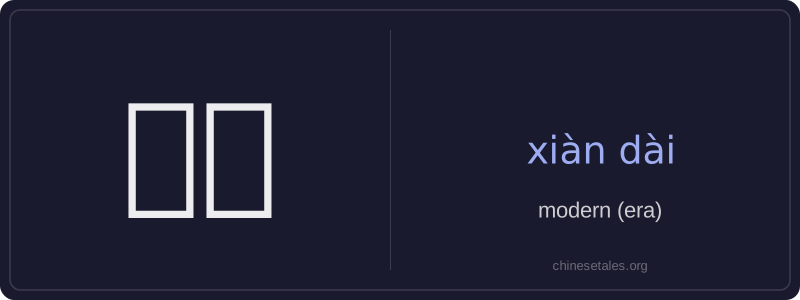
现代 (xiàn dài) literally means 'present generation' — 现 (xiàn) means 'now, present', and 代 (dài) means 'generation, era, or age'. Together, they form a noun referring to the 'modern era', typically spanning from the late 19th or early 20th century to the present day. It’s commonly used in historical, cultural, and academic contexts to distinguish contemporary developments from ancient, imperial, or pre-modern periods.
This term is rarely used alone as a standalone descriptor like an adjective (e.g., you wouldn’t say *现代 book* without a noun); instead, it functions as a noun modifier — always followed by another noun such as 中国 (China), 文学 (literature), 科技 (technology), or 社会 (society). It carries a neutral, scholarly tone and appears frequently in textbooks, news reports, and museum exhibits when discussing recent historical transformations.
Example Sentences
Related Words
我的
我的 (wǒ de) is a possessive pronoun meaning 'my'
一天
‘一天’ literally combines the numeral ‘一’ (y
在家
'Zài jiā' literally combines the preposition 'z
不对
不对 (bù duì) literally combines 不 (bù), meani
这边
这边 (zhè biān) literally combines 这 (zhè, 'th
中国
‘Zhōngguó’ literally means ‘Middle Kingdom’
中学
'Zhōngxué' literally combines 'zhōng' (middle)
红色的
红色的 (hóng sè de) is an adjective meaning 'red