Word Explanation
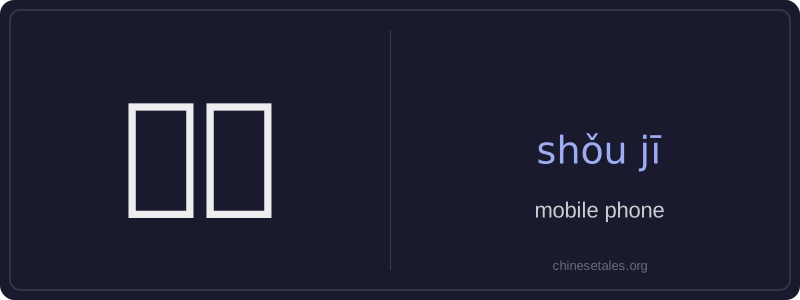
'手机' (shǒu jī) literally means 'hand machine' — '手' (shǒu) means 'hand', and '机' (jī) means 'machine' or 'device'. Together, they refer to the portable communication device we carry in our hands: the mobile phone. It is the standard, neutral term used across mainland China, Taiwan, and other Mandarin-speaking regions, replacing older terms like '大哥大' (dà gē dà) in everyday speech.
This word is essential for daily life — used when talking about making calls, sending messages, using apps, or even losing or charging your device. Unlike English, Chinese doesn’t distinguish formally between 'mobile phone' and 'cell phone'; '手机' covers all modern handheld phones, whether smartphones or basic models. It’s commonly modified by measure words like '一部' (yí bù) — e.g., '一部手机' — and frequently appears in phrases like '玩手机' (wán shǒu jī, 'to play on one’s phone') or '关机' (guān jī, 'to power off').
Example Sentences
Related Words
我的
我的 (wǒ de) is a possessive pronoun meaning 'my'
中国
‘Zhōngguó’ literally means ‘Middle Kingdom’
一天
‘一天’ literally combines the numeral ‘一’ (y
在家
'Zài jiā' literally combines the preposition 'z
不对
不对 (bù duì) literally combines 不 (bù), meani
这边
这边 (zhè biān) literally combines 这 (zhè, 'th
中学
'Zhōngxué' literally combines 'zhōng' (middle)
红色的
红色的 (hóng sè de) is an adjective meaning 'red