Word Explanation
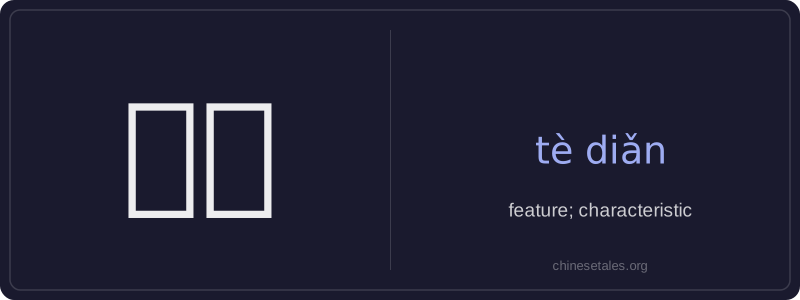
特点 (tè diǎn) literally combines 特 (tè), meaning 'special' or 'distinctive', and 点 (diǎn), meaning 'point' or 'aspect'. Together, they refer to a distinguishing feature or characteristic that sets something apart from others — whether a person, object, animal, or concept. It emphasizes what is notable, unique, or defining about the subject.
This noun is widely used in descriptive, analytical, and comparative contexts — for example, when discussing the physical traits of animals, design elements of products, cultural traits of societies, or personality traits of individuals. It often appears after classifiers like 这个 (zhège, 'this') or 在 (zài, 'in/at'), and commonly pairs with verbs like 有 (yǒu, 'has'), 具有 (jùyǒu, 'possesses'), or 是 (shì, 'is'). Unlike more colloquial terms like 东西 (dōngxi, 'thing'), 特点 carries a neutral-to-formal tone and is standard in both spoken and written Chinese.
Example Sentences
Related Words
我的
我的 (wǒ de) is a possessive pronoun meaning 'my'
中国
‘Zhōngguó’ literally means ‘Middle Kingdom’
一天
‘一天’ literally combines the numeral ‘一’ (y
一心
‘一心’ literally combines ‘one’ (一) and ‘hea
在家
'Zài jiā' literally combines the preposition 'z
不对
不对 (bù duì) literally combines 不 (bù), meani
这边
这边 (zhè biān) literally combines 这 (zhè, 'th
中学
'Zhōngxué' literally combines 'zhōng' (middle)