Word Explanation
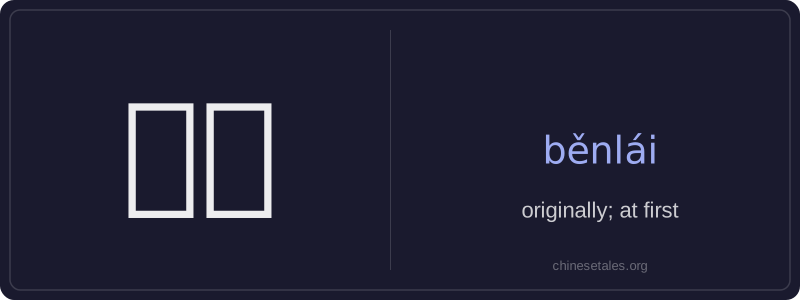
Originally meaning 'the root or origin' (本) plus 'to come' (来), 本来 literally evokes something that 'comes from the root' — hence its core sense of 'originally' or 'at first'. It functions almost exclusively as an adverb, typically placed before a verb or adjective to indicate how things were before a change occurred, or how they were expected to be. It often implies contrast with what actually happened later — for example, a plan that changed, or a situation that turned out differently than anticipated.
This word appears frequently in everyday speech and writing when explaining past intentions, initial conditions, or unfulfilled expectations. It can also soften statements or express mild surprise ('I thought it was like this, but...'). Unlike some time-related adverbs, 本来 does not specify exact timing; rather, it points to a prior state or intention relative to the current one. It’s neutral in register and appropriate in both casual and formal contexts.
Example Sentences
Related Words
我的
我的 (wǒ de) is a possessive pronoun meaning 'my'
这边
这边 (zhè biān) literally combines 这 (zhè, 'th
中国
‘Zhōngguó’ literally means ‘Middle Kingdom’
一天
‘一天’ literally combines the numeral ‘一’ (y
一心
‘一心’ literally combines ‘one’ (一) and ‘hea
在家
'Zài jiā' literally combines the preposition 'z
不对
不对 (bù duì) literally combines 不 (bù), meani
中学
'Zhōngxué' literally combines 'zhōng' (middle)