Word Explanation
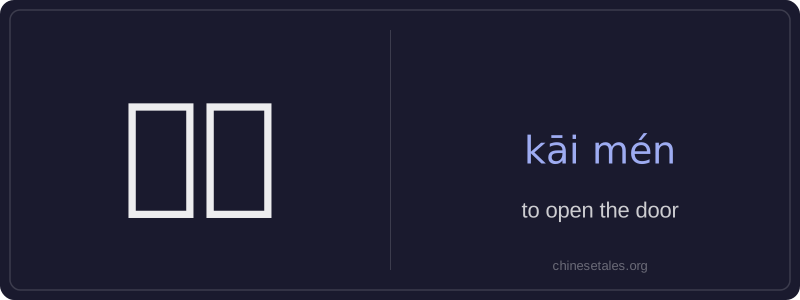
‘开门’ literally means 'open door' and functions as a verb meaning 'to open the door'. The first character 开 (kāi) means 'to open' or 'to start', and the second character 门 (mén) means 'door'. Together, they form a common, concrete action verb used in everyday situations — from unlocking and swinging open a physical door to metaphorical uses like 'opening the door to opportunity'. It is typically used in the present or imperative tense, often with objects (e.g., 开门、把门打开) or in serial verb constructions (e.g., 走过去开门).
This phrase appears frequently in daily interactions: answering the doorbell, entering a room, or giving instructions. It can also appear in compound verbs like 开门见山 ('open the door and see the mountain', i.e., get straight to the point), but in its basic form, it always refers to the physical act of opening a door. Learners should note that it is not used for opening things other than doors — for windows, boxes, or bottles, different verbs apply (e.g., 开窗, 打开盒子, 拧开瓶盖).
Example Sentences
Related Words
我的
我的 (wǒ de) is a possessive pronoun meaning 'my'
这边
这边 (zhè biān) literally combines 这 (zhè, 'th
中国
‘Zhōngguó’ literally means ‘Middle Kingdom’
一天
‘一天’ literally combines the numeral ‘一’ (y
一心
‘一心’ literally combines ‘one’ (一) and ‘hea
在家
'Zài jiā' literally combines the preposition 'z
不对
不对 (bù duì) literally combines 不 (bù), meani
中学
'Zhōngxué' literally combines 'zhōng' (middle)