Word Explanation
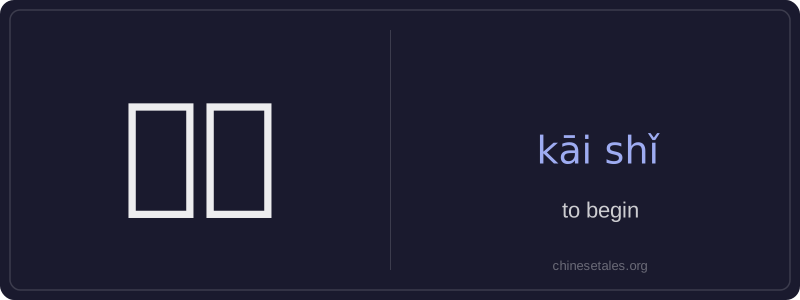
开始 (kāi shǐ) is a verb meaning 'to begin' or 'to start.' It combines two characters: 开 (kāi), which means 'to open' or 'to initiate,' and 始 (shǐ), meaning 'to begin' or 'origin.' Together, they reinforce the idea of initiating an action or event — much like saying 'open the beginning.' It’s commonly used for starting activities, processes, meetings, classes, or even abstract concepts like relationships or projects.
This word functions as a transitive verb and usually takes a direct object (e.g., 开始工作, 开始学习). It can also appear in compound structures like 开始了 (has begun) or 正在开始 (is beginning). Unlike some other verbs, 开始 is neutral in register — appropriate in both spoken and written Chinese, from casual conversations to formal reports. It’s rarely used as a noun; when nominalization is needed, people say 开始的时候 (at the beginning) or 起始 (a more literary synonym).
Example Sentences
Related Words
我的
我的 (wǒ de) is a possessive pronoun meaning 'my'
这边
这边 (zhè biān) literally combines 这 (zhè, 'th
中国
‘Zhōngguó’ literally means ‘Middle Kingdom’
一天
‘一天’ literally combines the numeral ‘一’ (y
一心
‘一心’ literally combines ‘one’ (一) and ‘hea
在家
'Zài jiā' literally combines the preposition 'z
不对
不对 (bù duì) literally combines 不 (bù), meani
中学
'Zhōngxué' literally combines 'zhōng' (middle)