Word Explanation
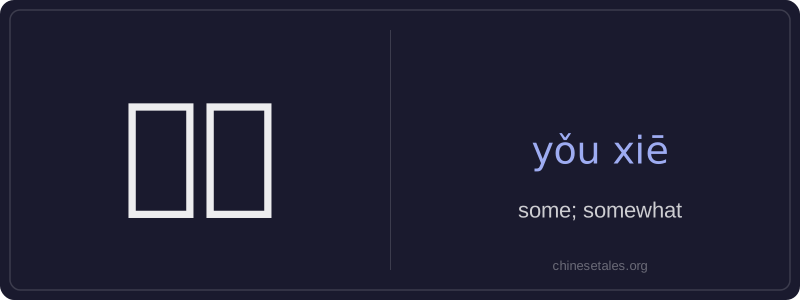
有些 (yǒu xiē) is a versatile two-character expression meaning 'some' when modifying nouns (e.g., some people, some problems), and 'somewhat' or 'a bit' when modifying adjectives or verbs (e.g., somewhat tired, a bit nervous). Literally, 有 means 'to have' and 些 means 'a few' or 'some', so together they convey the idea of 'having some' — implying partiality, moderation, or indefiniteness. It’s commonly used in both spoken and written Chinese to soften statements, express hesitation, or indicate a limited degree.
This word functions as a quantifier before countable nouns (e.g., 有些人, some people) or as a degree adverb before adjectives/verbs (e.g., 有些累, somewhat tired). Unlike the numeral 一些 (yī xiē), which only means 'some' and cannot modify adjectives, 有些 carries an evaluative or subjective nuance — often suggesting mildness, uncertainty, or understatement. It frequently appears in expressions of personal feeling, opinion, or observation, especially in polite or cautious speech.
Example Sentences
Related Words
我的
我的 (wǒ de) is a possessive pronoun meaning 'my'
这边
这边 (zhè biān) literally combines 这 (zhè, 'th
中国
‘Zhōngguó’ literally means ‘Middle Kingdom’
一天
‘一天’ literally combines the numeral ‘一’ (y
一心
‘一心’ literally combines ‘one’ (一) and ‘hea
在家
'Zài jiā' literally combines the preposition 'z
不对
不对 (bù duì) literally combines 不 (bù), meani
这么
这么 (zhè me) is an adverb meaning 'so' or 'this