Word Explanation
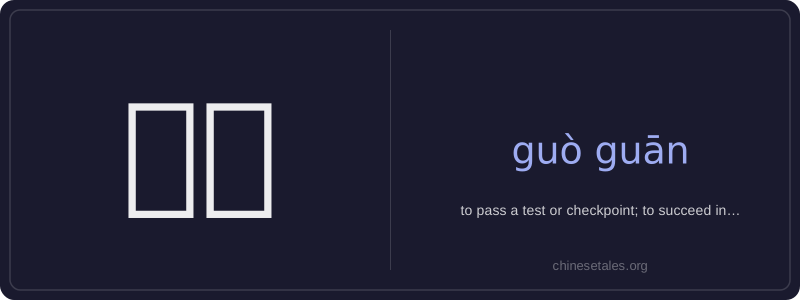
过关 literally means 'to pass the pass' — '过' (guò) means 'to pass, cross, or go through', and '关' (guān) means 'checkpoint, barrier, or gate'. Historically, it referred to passing through frontier checkpoints in ancient China; today it’s used metaphorically for overcoming any kind of hurdle — especially tests, exams, security checks, game levels, or official reviews. It emphasizes successful completion under scrutiny or pressure.
The phrase is commonly used in both formal and informal contexts: students say they hope to 过关 on an exam; job applicants talk about 过关 after interviews; gamers celebrate when their character 过关 a difficult stage. It can be used transitively (e.g., 过关考试) or intransitively (e.g., 终于过关了), and often appears in spoken Chinese with a sense of relief or accomplishment.
Example Sentences
Related Words
我的
我的 (wǒ de) is a possessive pronoun meaning 'my'
这边
这边 (zhè biān) literally combines 这 (zhè, 'th
这么
这么 (zhè me) is an adverb meaning 'so' or 'this
中国
‘Zhōngguó’ literally means ‘Middle Kingdom’
一天
‘一天’ literally combines the numeral ‘一’ (y
一心
‘一心’ literally combines ‘one’ (一) and ‘hea
在家
'Zài jiā' literally combines the preposition 'z
不对
不对 (bù duì) literally combines 不 (bù), meani