Word Explanation
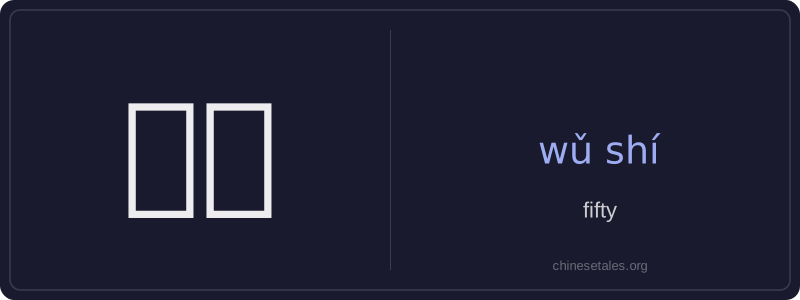
五十 (wǔ shí) is the Chinese numeral for 'fifty'. It is formed by combining the character 五 (wǔ), meaning 'five', and 十 (shí), meaning 'ten'. Literally, it expresses 'five tens', following the base-ten structure of Chinese numerals. Unlike English, which uses a single word ('fifty'), Chinese constructs compound numbers logically: multiples of ten are always expressed as [digit] + 十.
This numeral appears frequently in daily life — counting age, money, time (e.g., 50 minutes), quantities, and measurements. It’s used identically whether counting objects, stating ages, or giving prices. As with all Chinese numerals, 五十 functions as a determiner before nouns (e.g., 五十本书) or stands alone as a noun phrase (e.g., 他今年五十). It carries no grammatical gender or plural marking, and tone sandhi does not apply between wǔ and shí.
Example Sentences
Related Words
我的
我的 (wǒ de) is a possessive pronoun meaning 'my'
这么
这么 (zhè me) is an adverb meaning 'so' or 'this
这边
这边 (zhè biān) literally combines 这 (zhè, 'th
中国
‘Zhōngguó’ literally means ‘Middle Kingdom’
一天
‘一天’ literally combines the numeral ‘一’ (y
一心
‘一心’ literally combines ‘one’ (一) and ‘hea
在家
'Zài jiā' literally combines the preposition 'z
不对
不对 (bù duì) literally combines 不 (bù), meani