Word Explanation
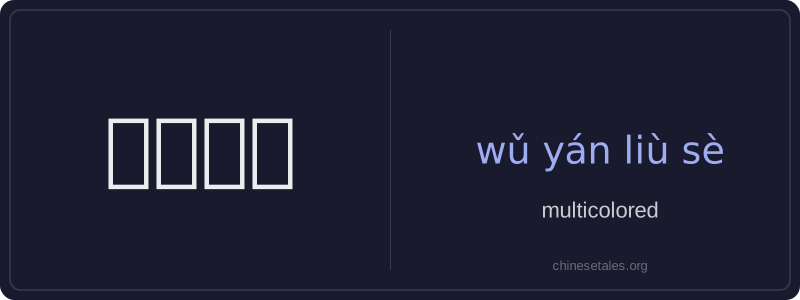
‘Wǔ yán liù sè’ literally means ‘five faces, six colors’, but it’s an idiomatic expression meaning ‘multicolored’ or ‘a dazzling array of colors’. Though the numbers five and six are specific, they’re used figuratively here to suggest abundance and variety—not a literal count. The character 颜 (yán) originally meant ‘face’ or ‘appearance’, but in this idiom it functions more broadly as ‘hue’ or ‘shade’. 色 (sè) means ‘color’. Together, the phrase evokes vivid, lively, often cheerful visual richness—commonly describing natural scenes, festive decorations, children’s drawings, or animals with bright plumage or markings.
This idiom is widely used in descriptive writing and speech, especially when emphasizing visual diversity and vibrancy. It carries a positive, lively connotation and appears frequently in literature, advertising, and everyday descriptions of colorful things—like butterflies, markets, or holiday displays. It’s slightly more literary than plain terms like ‘hěn duō yán sè’ (many colors), but remains fully natural in both spoken and written Mandarin.
Example Sentences
Related Words
我的
我的 (wǒ de) is a possessive pronoun meaning 'my'
这么
这么 (zhè me) is an adverb meaning 'so' or 'this
这边
这边 (zhè biān) literally combines 这 (zhè, 'th
中国
‘Zhōngguó’ literally means ‘Middle Kingdom’
一天
‘一天’ literally combines the numeral ‘一’ (y
一心
‘一心’ literally combines ‘one’ (一) and ‘hea
在家
'Zài jiā' literally combines the preposition 'z
不对
不对 (bù duì) literally combines 不 (bù), meani