Word Explanation
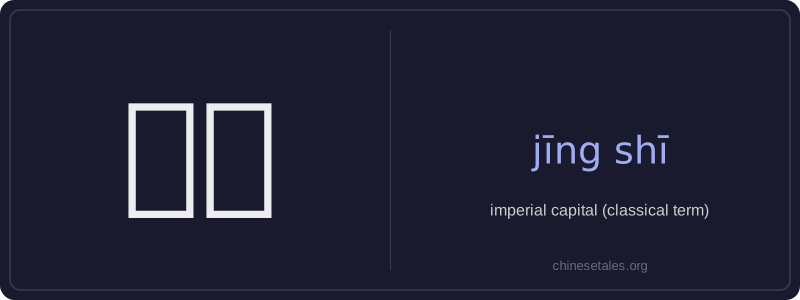
‘京师’ is a classical Chinese term meaning 'imperial capital'—the seat of the emperor and central government during dynastic times. The character 京 (jīng) means 'capital' or 'metropolis', while 师 (shī) here does not mean 'teacher' but rather carries its archaic sense of 'multitude' or 'assembly', implying the gathering of officials, troops, and scholars in the imperial center. Together, they evoke the political, ceremonial, and administrative heart of the empire.
This term appears frequently in historical texts, poetry, and official documents from the Han to Qing dynasties. It was used formally and respectfully—never for just any large city—and often contrasted with regional capitals or frontier garrisons. Though obsolete in modern administrative language (replaced by 北京 or 首都), 京师 remains vital for reading classical literature, understanding historical geography, and recognizing cultural references in art or scholarship.
Example Sentences
Related Words
我的
我的 (wǒ de) is a possessive pronoun meaning 'my'
这么
这么 (zhè me) is an adverb meaning 'so' or 'this
这边
这边 (zhè biān) literally combines 这 (zhè, 'th
中国
‘Zhōngguó’ literally means ‘Middle Kingdom’
一天
‘一天’ literally combines the numeral ‘一’ (y
一心
‘一心’ literally combines ‘one’ (一) and ‘hea
在家
'Zài jiā' literally combines the preposition 'z
不对
不对 (bù duì) literally combines 不 (bù), meani