Word Explanation
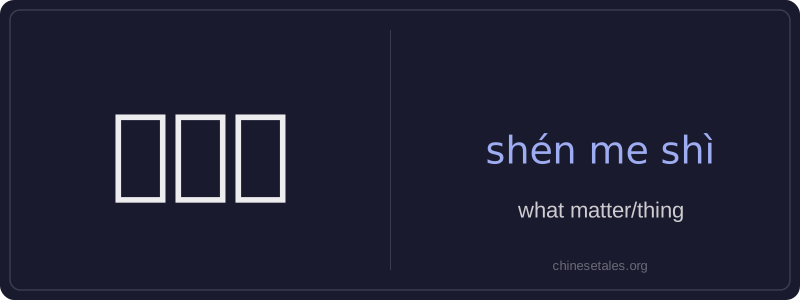
什么事 (shén me shì) literally combines 什 (shén, interrogative prefix), 么 (me, grammatical particle that forms the interrogative compound 什么), and 事 (shì, 'matter' or 'thing'). Together, it functions as an interrogative pronoun meaning 'what matter?' or more naturally in English, 'what's wrong?', 'what happened?', or 'what is it?'. It’s used to ask about events, problems, situations, or general concerns — often with a tone of curiosity, concern, or mild alarm.
This phrase appears frequently in spoken Chinese, especially in questions seeking clarification about unexpected or unusual circumstances. It’s neutral in register but tends to sound more conversational than formal. Unlike 什么东西 (what thing), which can refer to physical objects, 什么事 focuses on events, issues, or abstract matters — for example, someone looking upset, hearing a loud noise, or noticing a change in plans.
Example Sentences
Related Words
我的
我的 (wǒ de) is a possessive pronoun meaning 'my'
这么
这么 (zhè me) is an adverb meaning 'so' or 'this
这边
这边 (zhè biān) literally combines 这 (zhè, 'th
中国
‘Zhōngguó’ literally means ‘Middle Kingdom’
中学
'Zhōngxué' literally combines 'zhōng' (middle)
一天
‘一天’ literally combines the numeral ‘一’ (y
一心
‘一心’ literally combines ‘one’ (一) and ‘hea
在家
'Zài jiā' literally combines the preposition 'z