Word Explanation
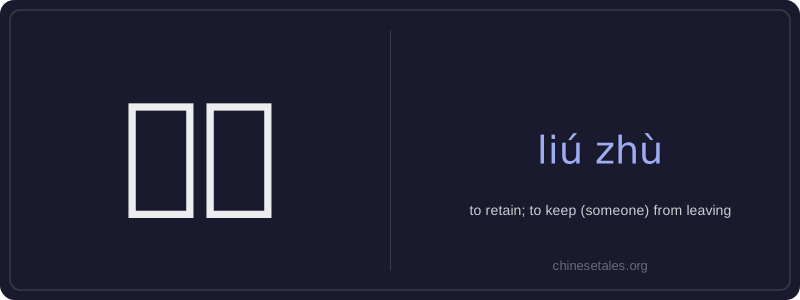
留住 is a compound verb meaning 'to retain' or 'to keep (someone or something) from leaving or disappearing.' It combines 留 (liú), which means 'to stay,' 'to remain,' or 'to keep,' and 住 (zhù), which functions as a resultative complement indicating completion or cessation of movement — literally 'to stop at a place' or 'to hold in place.' Together, they express the idea of successfully preventing departure, loss, or change.
This verb is commonly used in emotional, interpersonal, or practical contexts: persuading someone not to leave a job or relationship; preserving memories, youth, or natural beauty; or keeping physical objects from being lost. It often implies effort, intention, or urgency — for example, a manager trying to retain a valued employee, or an environmentalist seeking to preserve endangered habitats. Unlike simple verbs like 保留 (to preserve/retain formally), 留住 feels more immediate and personal, frequently appearing in spoken language and heartfelt appeals.
Example Sentences
Related Words
我的
我的 (wǒ de) is a possessive pronoun meaning 'my'
这么
这么 (zhè me) is an adverb meaning 'so' or 'this
这边
这边 (zhè biān) literally combines 这 (zhè, 'th
中国
‘Zhōngguó’ literally means ‘Middle Kingdom’
中学
'Zhōngxué' literally combines 'zhōng' (middle)
一天
‘一天’ literally combines the numeral ‘一’ (y
一心
‘一心’ literally combines ‘one’ (一) and ‘hea
在家
'Zài jiā' literally combines the preposition 'z