Word Explanation
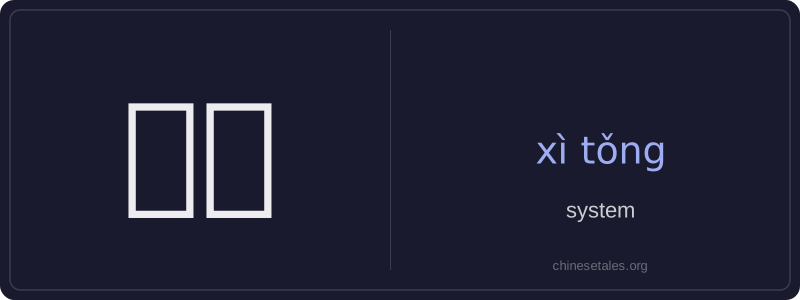
系统 (xì tǒng) literally combines 系 (xì), meaning 'to connect' or 'a series', and 统 (tǒng), meaning 'to unify' or 'to integrate'. Together, they convey the idea of an organized, interconnected whole—whether mechanical, biological, digital, or conceptual. It’s a broad, abstract noun used across many domains: computer systems, transportation systems, educational systems, and especially biological systems like the digestive or immune system.
In daily usage, 系统 often appears in formal, technical, or institutional contexts—not casual speech. It implies structure, function, and interdependence among components. Unlike English 'system', it rarely refers to informal arrangements (e.g., 'my personal system for remembering names') unless metaphorically. Native speakers commonly pair it with modifiers like 'operating', 'management', or 'ecological' to specify type, and it frequently appears in compound nouns such as 操作系统 (operating system) or 管理系统 (management system).
Example Sentences
Related Words
我的
我的 (wǒ de) is a possessive pronoun meaning 'my'
这么
这么 (zhè me) is an adverb meaning 'so' or 'this
这边
这边 (zhè biān) literally combines 这 (zhè, 'th
中国
‘Zhōngguó’ literally means ‘Middle Kingdom’
中学
'Zhōngxué' literally combines 'zhōng' (middle)
一天
‘一天’ literally combines the numeral ‘一’ (y
一心
‘一心’ literally combines ‘one’ (一) and ‘hea
在家
'Zài jiā' literally combines the preposition 'z