Word Explanation
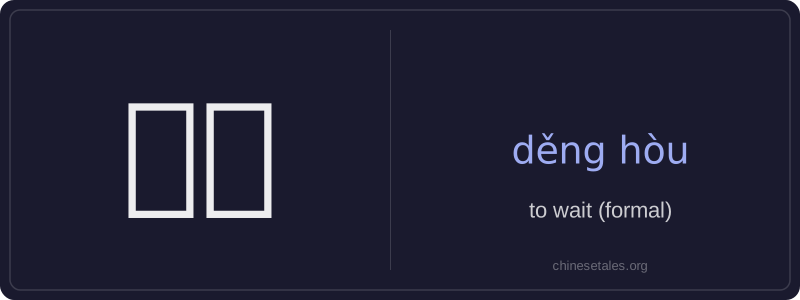
等候 means 'to wait' in a formal, respectful, or patient context — it's more polished and less casual than the simpler 等 (děng). The character 等 means 'to wait' or 'to await', while 候 adds nuance of anticipation, respect, or official procedure; together, they emphasize waiting with attentiveness, often in structured or institutional settings like offices, hospitals, airports, or service counters.
This verb is commonly used when waiting for people (e.g., a superior or guest), appointments, results, or official procedures. It implies patience and formality — you wouldn’t use it for casually waiting for a friend at a café (use 等 instead). 等候 is frequently found in signs ('请等候通知' — 'Please await notification'), announcements, and written instructions. It’s transitive and usually takes an object (e.g., 等候客人, 等候检查), though the object may be omitted if clear from context.
Example Sentences
Related Words
我的
我的 (wǒ de) is a possessive pronoun meaning 'my'
这么
这么 (zhè me) is an adverb meaning 'so' or 'this
这边
这边 (zhè biān) literally combines 这 (zhè, 'th
中国
‘Zhōngguó’ literally means ‘Middle Kingdom’
中学
'Zhōngxué' literally combines 'zhōng' (middle)
一天
‘一天’ literally combines the numeral ‘一’ (y
一心
‘一心’ literally combines ‘one’ (一) and ‘hea
在家
'Zài jiā' literally combines the preposition 'z