Word Explanation
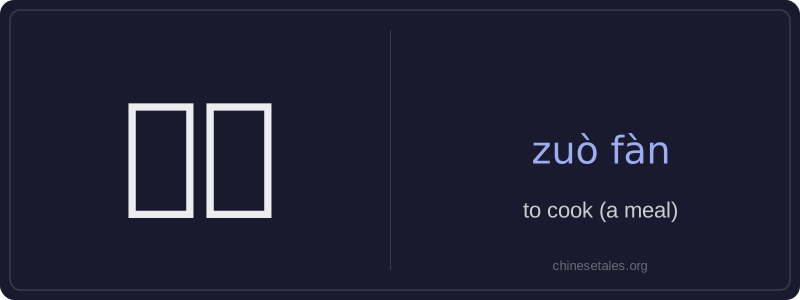
'做饭' literally combines '做' (zuò), meaning 'to do/make', and '饭' (fàn), meaning 'cooked rice' or more broadly 'a meal'. Together, it means 'to cook (a meal)' — not just preparing rice, but the full process of preparing food for eating. It’s a common, everyday verb used in domestic, family, and casual contexts, and emphasizes the act of cooking rather than the result.
This verb is typically used with subjects like 'I', 'you', 'mom', or 'dad', and often appears in sentences about daily responsibilities, habits, or invitations. Unlike more formal or technical terms (e.g., 烹饪), 做饭 is neutral, widely understood, and appropriate for all ages and registers — from children describing their chores to adults planning dinner. It’s rarely used without an object (e.g., you wouldn’t say 'I do cooking' abstractly); instead, it implies preparing food for consumption, usually at home.
Example Sentences
Related Words
我的
我的 (wǒ de) is a possessive pronoun meaning 'my'
这么
这么 (zhè me) is an adverb meaning 'so' or 'this
这边
这边 (zhè biān) literally combines 这 (zhè, 'th
中国
‘Zhōngguó’ literally means ‘Middle Kingdom’
中学
'Zhōngxué' literally combines 'zhōng' (middle)
一天
‘一天’ literally combines the numeral ‘一’ (y
一心
‘一心’ literally combines ‘one’ (一) and ‘hea
在家
'Zài jiā' literally combines the preposition 'z