Word Explanation
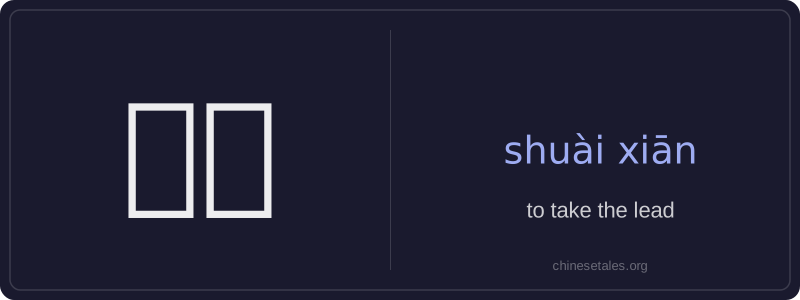
率先 means 'to take the lead' or 'to be the first to act', emphasizing initiative and precedence in action. The character 率 (shuài) conveys 'to lead' or 'to command', while 先 (xiān) means 'first' or 'before others'; together, they form an adverbial phrase indicating proactive, pioneering behavior. It is commonly used in formal or semi-formal contexts—such as news reports, policy announcements, or workplace communication—to highlight who acted earliest or most decisively in a group effort.
This word carries a positive, commendatory tone and is often paired with verbs like 推出 (launch), 实施 (implement), 或 行动 (act). Unlike casual expressions like 先来 (come first), 率先 implies intentionality, responsibility, and often leadership or influence—it’s not merely about timing but about setting an example. It typically modifies verbs directly and usually appears before the verb it modifies, without particles like 地.
Example Sentences
Related Words
我的
我的 (wǒ de) is a possessive pronoun meaning 'my'
这么
这么 (zhè me) is an adverb meaning 'so' or 'this
这边
这边 (zhè biān) literally combines 这 (zhè, 'th
中国
‘Zhōngguó’ literally means ‘Middle Kingdom’
中学
'Zhōngxué' literally combines 'zhōng' (middle)
一天
‘一天’ literally combines the numeral ‘一’ (y
一心
‘一心’ literally combines ‘one’ (一) and ‘hea
在家
'Zài jiā' literally combines the preposition 'z